 Learn More About Our Organization

 Continue the Journey of Learning and Impact
 Explore Opportunities in the Sustainable Blue Economy
 Partner with us to support youth and the future of our planet

Packing for Expedition
Everything You Need to Bring
Staying warm, dry, and comfortable is essential for a safe and enjoyable journey—especially when you’re supporting youth in dynamic outdoor learning environments. Weather at sea changes quickly, so packing the right gear will help you stay focused, adaptable, and ready for each day. If you have any questions about what to bring, the SOI office is always happy to help.

Passport
All educators must travel with a valid passport. A clear photocopy will be required as part of your registration form. Once the program begins, the SOI team will collect and securely hold your passport until your return travel day.

Currency and Spending Money
Your expedition fee covers all major expenses, including travel, accommodations, meals, and programming. You may wish to bring some money for personal purchases or souvenirs in the communities we’ll visit. Consider bringing the Canadian (CAD), Danish (DKK), and/or American (USD) currency. Cash or VISA/Mastercard is most convenient for purchases.

Baggage
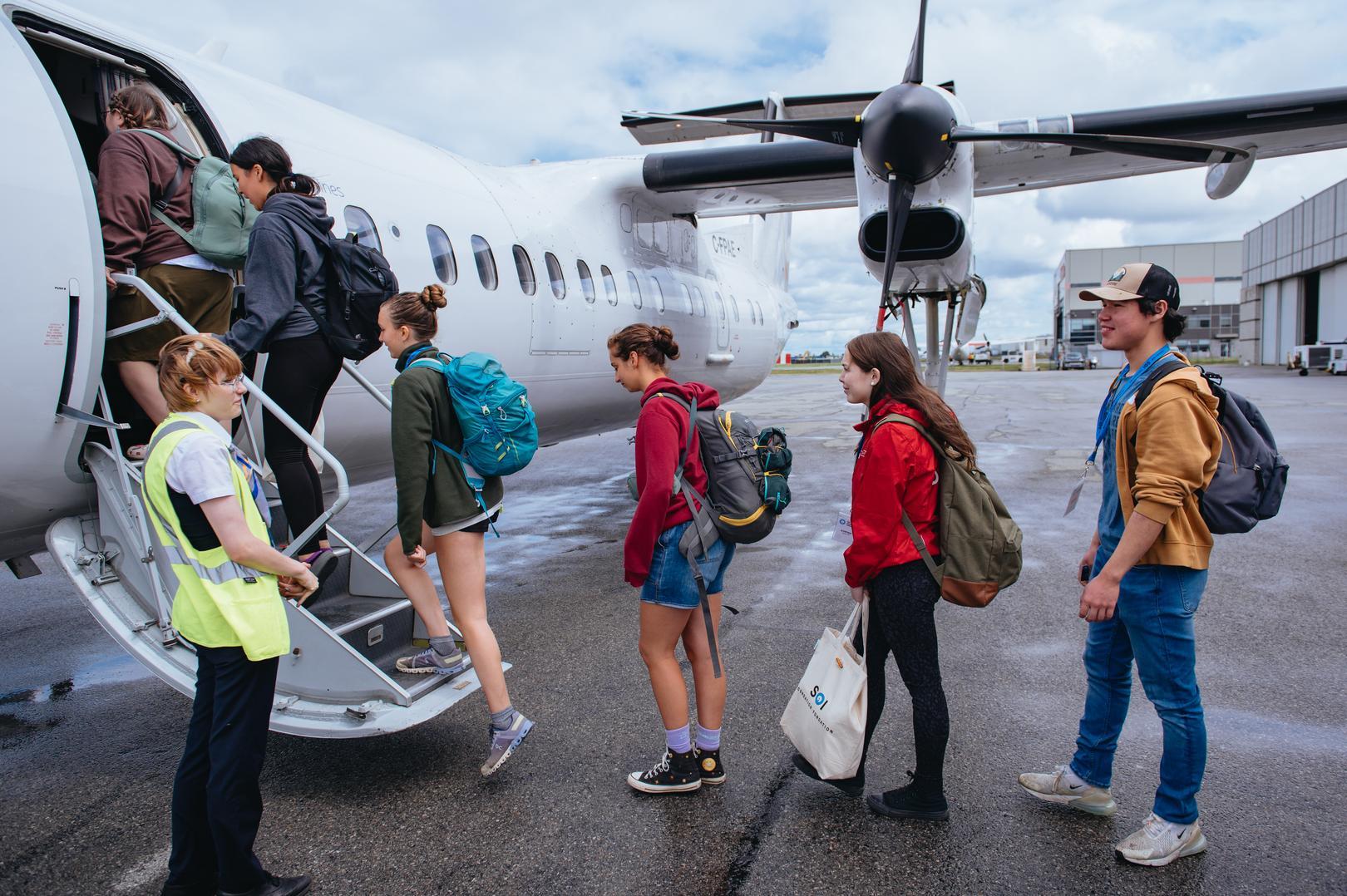
You are permitted one checked bag (maximum 50 lbs / 22.5 kg) with total dimensions not exceeding 158 cm / 62 in (L+W+H). Carry-on allowance is 11 lbs / 5 kg—your daypack is ideal for this. Please label all bags clearly with your name, phone number, and home address before leaving home. If you have additional baggage or equipment you're bringing, make sure to connect with the expedition team well in advance.
Rubber Boots
Rubber boots are the most ideal footwear for embarking and disembarking Zodiacs during wet shore landings. We encourage you to bring your own to ensure you have the correct size, but it is not a requirement. Rubber boots in a variety of sizes are available onboard the Ocean Nova.

Laundry
There is no opportunity to do laundry while aboard the Ocean Nova. We encourage participants to bring enough clothing for the duration of the expedition. Please refer to the packing list to ensure that you have packed enough clothing.
Packing Checklist
The packing checklist is very important to review. Being on board the ship is an incredible experience, but if you are not prepared with the appropriate gear, you’re very likely to be cold and uncomfortable. We want your time on the ship and on the land to be as enjoyable as possible!
Packing appropriate layers and outerwear is critically important. If you are missing certain items, consider borrowing them from family or friends before you decide to buy something. For more, refer to our notes on layering below.
A Few Notes About Layers
Layering is key: you can always remove a layer, but you can’t put on what you didn’t pack. Conditions on deck or in Zodiacs can feel colder than the actual temperature, which may range from 0°C to 25°C. A versatile layering system supports both comfort and safety.

Layer 1
The first part of a good layering system is your underwear/base layer, a basic insulation that pulls the moisture away from your skin. Look for light to medium-weight thermal tops and bottoms made of synthetic fabrics or wool, but not cotton. Wool and wool blends are recommended. Polyester is also suitable.

Layer 2
This insulating layer provides additional warmth. Look for goose down, which is lightweight and a great insulator. Wool is also great and has the added advantage of remaining efficient when wet. Fleece is probably the most commonly used synthetic and easy to find in any outdoor store.

Layer 3
The outer layer protects you from wind and rain. Look for a good waterproof rain jacket with a hood, and rain pants that are breathable. These will help keep you dry when it rains but also protect you from splashes while we are out on the water in the Zodiacs.