students on ice logo

Curatorial Statement

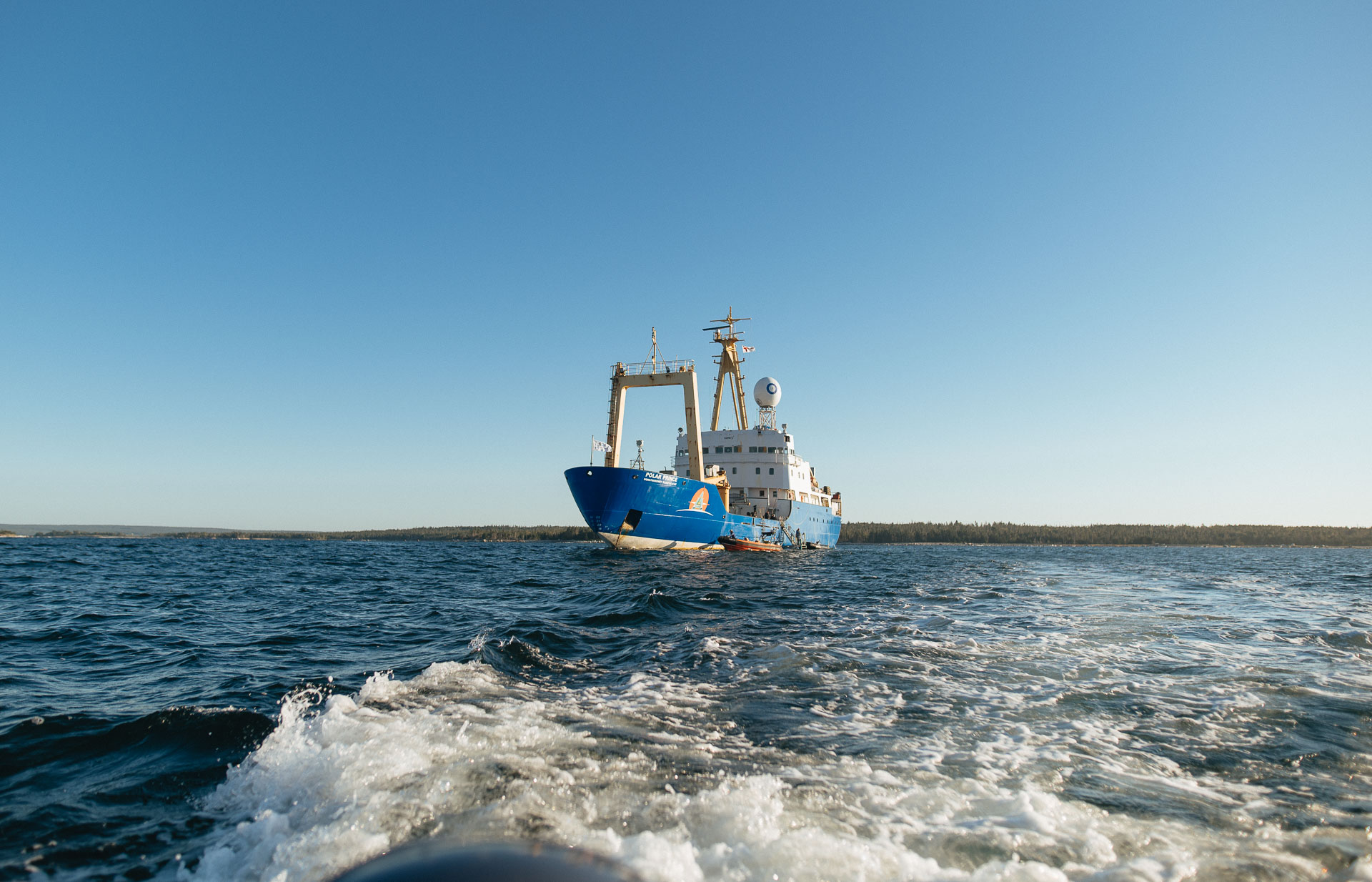
Coastal Conversations presents a selection of works stemming from a month spent sailing down Canada’s Pacific coastline as part of Canada C3, an expedition to mark the 150th anniversary of Confederation in 2017.  The art, photography, video, music and science are inspired by Canada’s ever-evolving environmental and socio-cultural landscapes, as well as from dialogue between Indigenous and non-Indigenous peoples. 


As we enter the United Nations Decade of Ocean Science for Sustainable Development, warming ocean temperatures, coastal erosion and advancing climate change force us to seek out the science we need for the ocean we want as well as innovative ways to protect our blue planet.


Connections to land, water and culture underscore the importance of sharing traditions and heritage with our youth. Working collectively through dialogue and action, the works featured in this exhibition reflect on the opportunity to repair past injustices, and ensure stewardship for future generations.


Coastal Conversations engages us in meaningful dialogue, stemming from Canada’s west coast but also resounding across this river of nations and nation of rivers. Together, these works explore the possibility of future harmony between the people, and the land and waters that sustain us.

Photo © Canada Council Art Bank.

Deanna Bailey (1976, Calgary, AB – )


NORTHERN HAIDA GWAII BEACH (left)

SGANG GWAAY LLANAGAAY BEACH (right)

2017 – Oil-based modelling clay on wood

Deanna (Dee) Bailey completed fine art and biology studies in Alberta and moved to the Yukon in 2010. She is interested in pushing the boundaries of 2D art and attempting to make paintings more sculptural. She has been painting with modeling clay. Deanna is a member of the Yukon Artists at Work Society. One of her main goals is to place nature at the forefront to encourage people to consider environmental stewardship. Deanna Bailey was a participant on Leg 13 of the Canada C3 expedition (Prince Rupert – Bella Bella, British Columbia).

I explore the fusion of sculpture and painting by creating representational images using oil-based modelling clay, and presenting these as objects in protective shadow boxes. My sculptural paintings invite viewers to look closely and to connect to their own experiences of the outdoors. Through my work, I strive to rekindle that awe for our natural surroundings and promote conversations about how we can work collectively to care for our land, animals and wilderness. These rocky beaches represent feelings experienced while learning from the Haida Nation. I think of each stone as unique with it’s own personal story, like so many of the people we met. By standing together we can support one another and celebrate our differences, we can work together towards common goals.

  • © Martin Lipman / SOI Foundation
  • © Martin Lipman / SOI Foundation
  • © Martin Lipman / SOI Foundation
  • © Martin Lipman / SOI Foundation
  • © Martin Lipman / SOI Foundation

Ship Logbook – October 5, 2017

SGang Gwaay Llanagaay – British Columbia

Today, we spent the morning in SGang Gwaay (Anthony Island), which is a UNESCO World Heritage Site. The Haida name means ‘wailing island’ and it comes from the sound of the air pushing through a rock on the island. SGang Gwaay is also the site of an ancient Haida village with 20 longhouses and many totem poles. We were honoured to visit a place with so much cultural and spiritual significance for the Haida. In the afternoon, we sailed on to Woodruff Bay on the south end of Haida Gwaii. We enjoyed walking along the sandy beach and a few brave folks even went for a swim in the Pacific Ocean. In the evening, Canada C3 participant Charles Hannah spoke with us about his work in oceanography. Throughout the day, members of the Canada C3 Expedition observed a fast in honour of the Moose Hide Campaign (a grassroots movement of Indigenous and non-Indigenous men and boys who are standing up against violence towards women and children.) After sunset, we came together to honour the end of the fast. We have learned so much from Haida Gwaii. It is hard to leave, but we know wonderful experiences await us as we return to mainland British Columbia.

-
icon-play
Photo © Stephen Underhay

The Art of Totem Poles

In the Haida culture, the cedar tree is known as the ‘tree of life’. Traditionally, when babies were born, they were placed in cedar boxes as were the bodies of people who died. The bark of the cedar tree has many other uses as well; for example, it can be woven into ropes, baskets and hats. These trees are also used for one of the well-known symbols of Haida culture – totem poles. Haida totem poles tell a story through the representation of human, animal and supernatural figures.

© Geoff Phillips

Geoff Phillips (1982, Regina, SK – )

NAMU

2017 – Oil on canvas

Geoff Phillips is a graduate of the BFA program at the University of Regina and is now based in Maple Creek, Sask. He has been an artist in residence at the Canadian Film Centre’s Habitat New Media Lab and directs the art program as artist in residence for park visitors and residents of Southwest Saskatchewan at Cypress Hills Interprovincial Park. Geoff has also created large-scale murals for several public commissions. Geoff Phillips was a participant on Leg 14 (Bella Bella – Campbell River, BC) of the Canada C3 Expedition.

Geoff Phillips sketching on Namu. © Taylor Roades / SOI Foundation

During Leg 14 of the journey along the West Coast of British Columbia, I painted both landscapes and portraits directly on canvas. I visited the abandoned fish cannery near the Heiltsuk village of Namu with our host, Chief Harvey Humchitt. He described to me his emotional upheaval regarding this sacred land, where his ancestors have been buried for millennia: the cannery site was the site of large-scale commercial fish processing operations and is now considered an ecological disaster, with responsibility for its cleanup left with the Heiltsuk people.

-
Koeye Camp, British Columbia. icon-play
Photo © Taylor Roades / SOI Foundation

Ship Logbook – October 13, 2017

Koeye Camp – British Columbia

At the foot of the Koeye River on the Pacific Ocean, the Heiltsuk Nation has built an incredible camp for their youth. At Koeye Camp, Heiltsuk children can get in touch with their culture and gain traditional knowledge, while connecting to the land and water.  Watch the video to understand more about this innovative program and the lasting impact on Heiltsuk children.

© Anna Gaby-Trotz

Anna Gaby-Trotz (1983, Toronto, ON – )

LISTEN. WE CANNOT CONTINUE TO INFINITELY MAKE THE SAME MISTAKES

2017 – Digital print

Anna Gaby-Trotz is a printmaker and photographer, and works as a Print and Digital Technician at the University of Guelph. Her work has taken her to places such as the Northwest Passage, the Nahanni River and most recently to Cape Dorset, Nunavut. Anna explores social issues through her portrait work and recently worked as a photographer on a project called Be Our Ally, where she partnered with rural youth examining issues of homophobia. Anna Gaby-Trotz was a participant on Leg 15 of the Canada C3 expedition (Campbell River – Victoria, British Columbia).

To settle is to stay in one place. My family is a mixture of European settlers. I joined Canada C3 on the final leg of the journey. I saw each point along the route as being both connected and separated by borders, seen and unseen. I have tried to walk gently through these. Listening was a strong theme. This journey goes beyond the discomfort of Canada defined as one nation at 150 years, toward a concept of Canada 150+. It is about looking at the same historical mistakes made over and over again. It is about the hope for a future involving many nations working on the difficult issue of reconciliation and with work yet to do.

© Martin Lipman / SOI Foundation

Ship Logbook – October 22, 2017

Nanoose Bay – British Columbia

After landing in Nanoose Bay, we began the day at the Mount Arrowsmith biosphere reserve, where we were greeted warmly by the Snaw-Naw-As First Nation. They explained the significance of the biosphere reserve to us. Tourism, fishing and forestry are some of the main sources of income for the area’s residents. The entire area also acts as a habitat for many avian species, including the endangered Vancouver Island Marmot and Vancouver Island White-tailed Ptarmigan.

Amy Tabata collecting water samples. © Taylor Roades / SOI Foundation
Amy Tabata recording sample data. © Taylor Roades / SOI Foundation

Ship Logbook – October 18, 2017

In search of eDNA

Yesterday, we did some ship cruising admiring towering mountains, stunning rainbows and gorgeous waterfalls. Our Canada C3 participant Bill Wilson, the Hereditary Chief of Musgamagw Nation, really helped to bring the history and culture of the region to life. At the same time, our science team was out on a separate, small boat conducting ongoing research into environmental (e)DNA. In the afternoon, one group of participants travelled by zodiac to explore the beautiful islands of the Broughton Archipelago Provincial Park and learn about the occupation and protests at local fish farms. Our long and interesting day concluded all gathered together in the hangar for a concert by our amazing Canada C3 singer-songwriters Tim Baker and Sarah Harmer. It’s hard to believe that the final leg of this once-in-a-lifetime expedition begins tomorrow.

Learning Activity: Exploring eDNA

Measuring eDNA in different parts of the ocean can help us answer all types of research questions, from looking at pathogens and parasites of wild salmon around open net farms to assessing shifts in biological communities relating to human disturbances. This case study activity is aimed towards high school students and can be used to practice the scientific process.


Educators can register for immediate access to digital and printable versions of the activity, in both English and French.

Register for access
-
icon-play

River of Nations

2017

River of Nations – written and performed by Alex Cuba, Andrea Menard and Heather Rankin, with Kaniehtiio Horn, Dardia Garcelle-Joseph, and the participants on board leg 2 of Canada C3. River of Nations combines lyrics sung in English, French, Mohawk and Spanish.

About Canada C3

Canada C3 was a Signature Project to mark Canada’s 150th Anniversary of Confederation in 2017. The centrepiece was an epic 150-day sailing expedition from Toronto, Ontario to Victoria, British Columbia via the Northwest Passage. Through this unprecedented journey, Canada C3 celebrated our environment, shared the stories of coastal communities and connected Canadians from coast to coast to coast.


To reflect the diversity of our country, an eclectic group of remarkable Canadians was invited on board, including Indigenous Elders, scientists, artists, historians, community leaders, youth, journalists and educators. Once a participant boarded the Canada C3 vessel, they became the eyes and ears of the rest of Canada. Using art, music, research and storytelling, participants elevated our collective knowledge and helped to build human connections.


Through contributions from every corner of the country, all ages and all walks of life, Canada C3 became a meeting place and a platform leading to long-lasting and meaningful connections, understanding, stories, art, music, scientific research and many important legacies for generations to come.


Learn more about Canada C3 here


Coastal Conversations Curators: Vinko Culjak Mathieu & Tara Mascarenhas, with funding support from Natural Science and Engineering Research Council (NSERC)