students on ice logo

On this page:

  • A learning activity on analyzing and monitoring eDNA in coastal British Columbia
  • Full learning modules, each highlighting a different aspect of the Sustainable Blue Economy
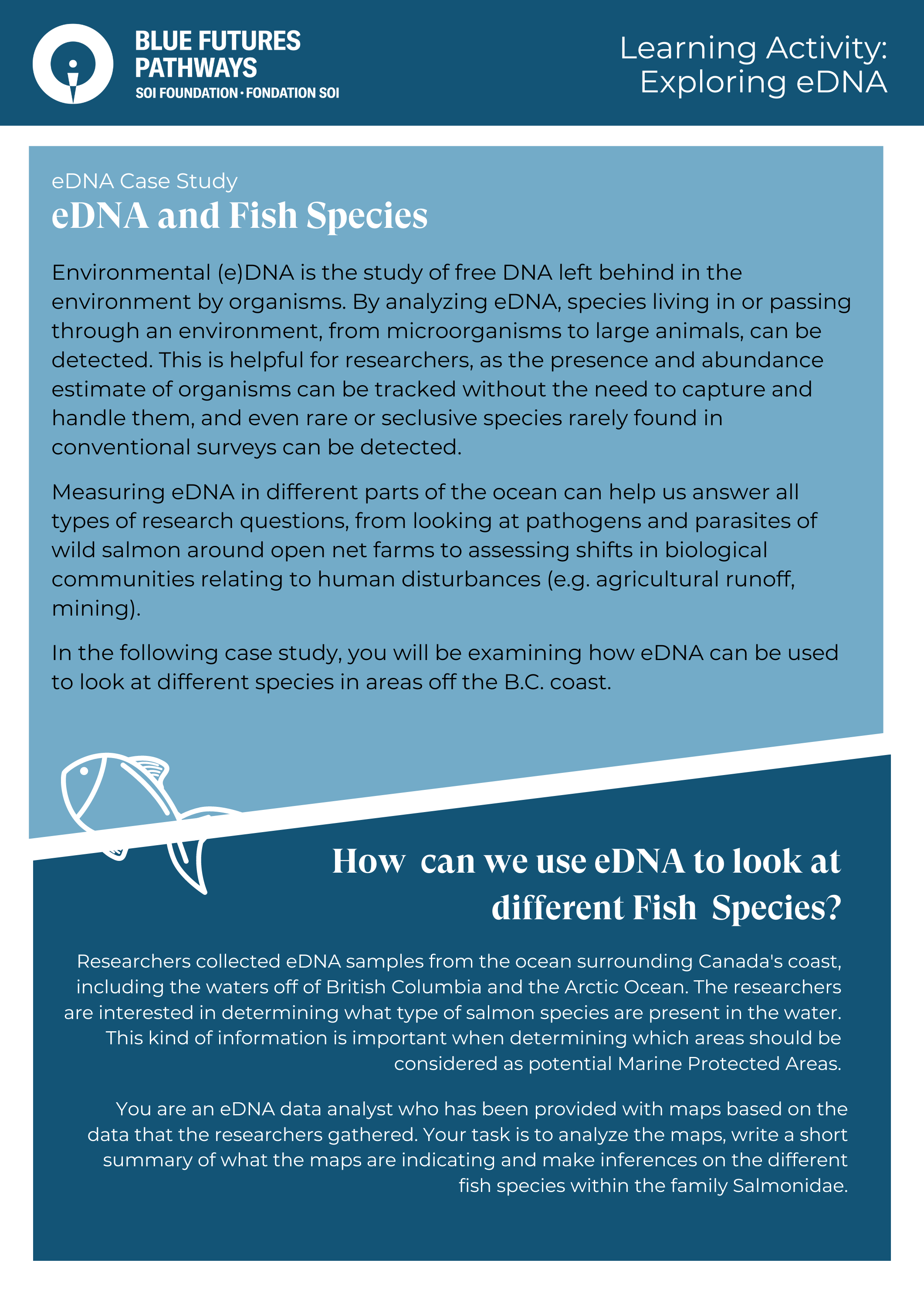
Learning Activity: Exploring eDNA

Measuring eDNA in different parts of the ocean can help us answer all types of research questions, from looking at pathogens and parasites of wild salmon around open net farms to assessing shifts in biological communities relating to human disturbances. This case study activity is aimed towards high school students and can be used to practice the scientific process.

To download the full digital, English version of the activity, click here.

French Digital Version


BFP Learning Modules


Blue Futures Pathways offers interactive, online and on-demand learning resources exploring different aspects of the Sustainable Blue Economy. Each module will prompt you to think about the issues related to our ocean and freshwater systems, and allow you to examine the career pathways of diverse professionals. Topics include marine water, fresh water, wastewater, the cryosphere (frozen water), and much more. Explore case studies, watch videos, engage in on-line discussions, and learn about career pathways as you work through the modules.

Are you aged 18-30 and interested in completing our full internship program, which includes mentorship and potentially work experience? Click here to learn more.


Tips & Hints

  • Each module takes about 60-90 minutes to complete. Use the links below to access each one.
  • On the bottom left corner of the module, you will see three vertical dots, click on that for the full-screen option.
  • This module is best explored by using your mouse, mouse pad, or finger to click through. Avoid using the arrow keys to toggle between the pages.
  • You will find embedded videos throughout the module. Once you hit play, you can enlarge to full screen for better viewing.

If you have any trouble accessing any of the content, please contact our Program Assistant.
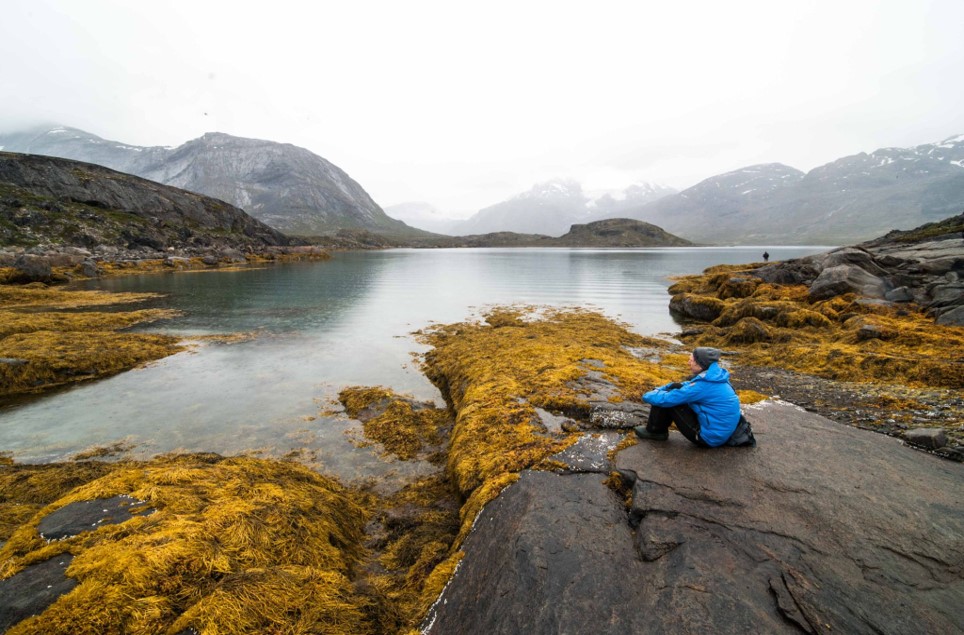
One: The Sustainable Blue Economy
Water is all around us in many forms and we engage with it in many ways. This first learning module introduces you to the hydrosphere, the people that work within it and they ways you can engage. Learn about the UN Sustainable Development Goals, shallow vs deep thinking, and begin to develop a mindset for the Sustainable Blue Economy.
Start exploring the SBE

Two: Marine Water

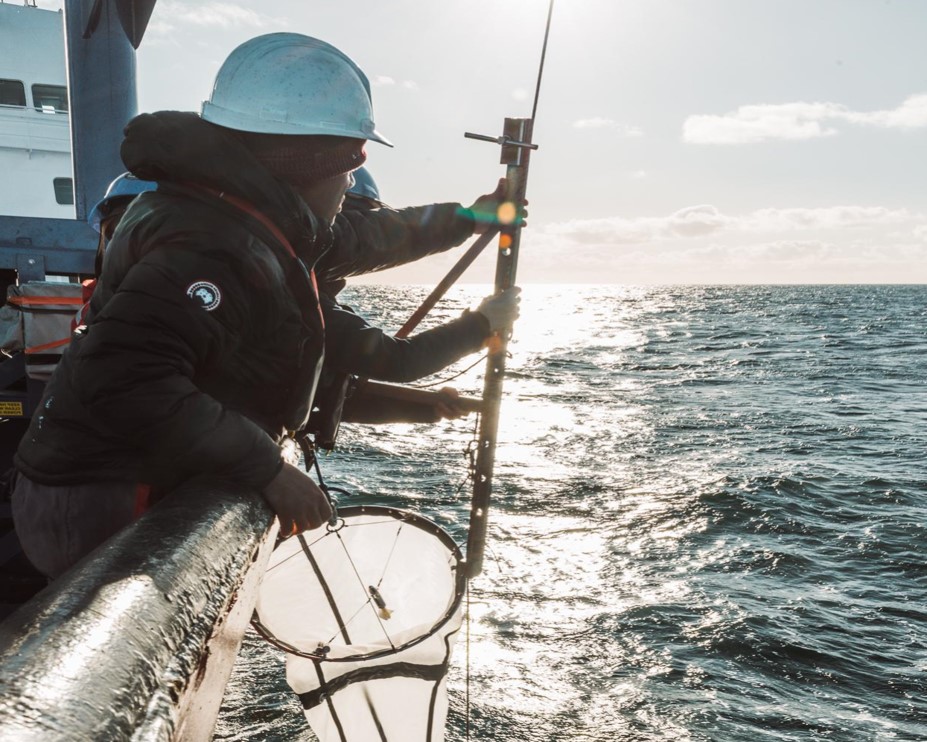
Though 70% of Earth is covered in water, we've only explore 4% of the ocean - and yet it contributes to a huge portion of the global economy. In this module, you'll learn about the challenges our ocean faces, such as pollution and climate change, and how we can create a Sustainable Blue Economy that addresses those challenges.
Explore marine waters

Three: Fresh Water

We use fresh water every day to water crops, clean our clothes, drink, and even generate power. Because fresh water forms an integral part of the Sustainable Blue Economy, it's paramount that we protect it from pollution and improve fresh water security. Explore this learning module to learn how the Sustainable Blue Economy address those challenges.
Explore fresh waters

Four: The Cryosphere

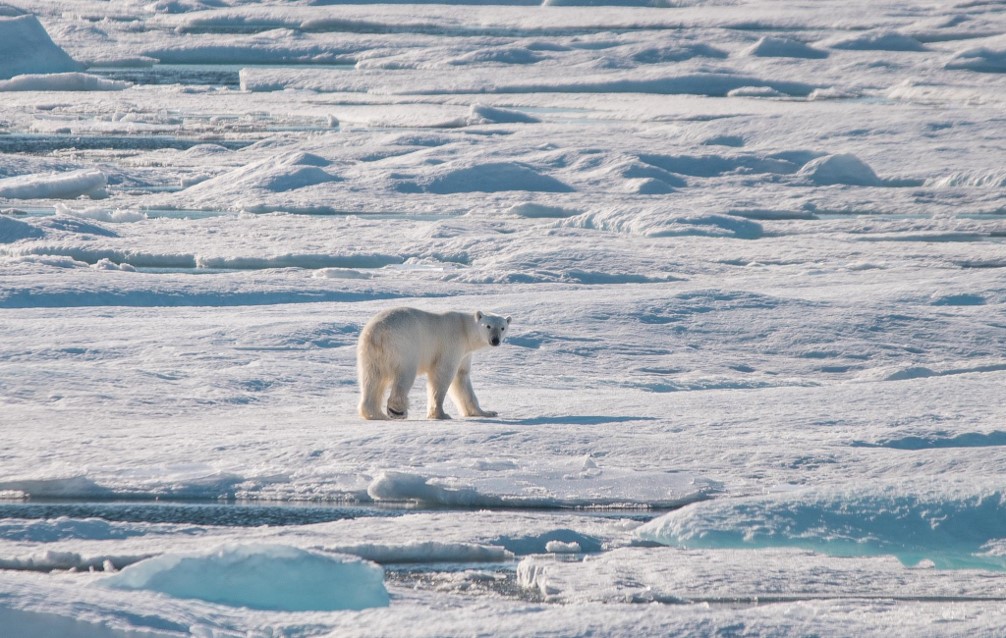
With almost 70% of Earth's fresh water locked in ice or permafrost, the cryosphere performs many key functions in regulating our climate. With global average temperatures increasing, ice reduction is affecting affect sectors such as tourism, hunting, and fishing. Learn how those working within the Sustainable Blue Economy are addressing challenges such as climate change and sea ice retreat.
Explore the cryosphere

Five: Wastewater

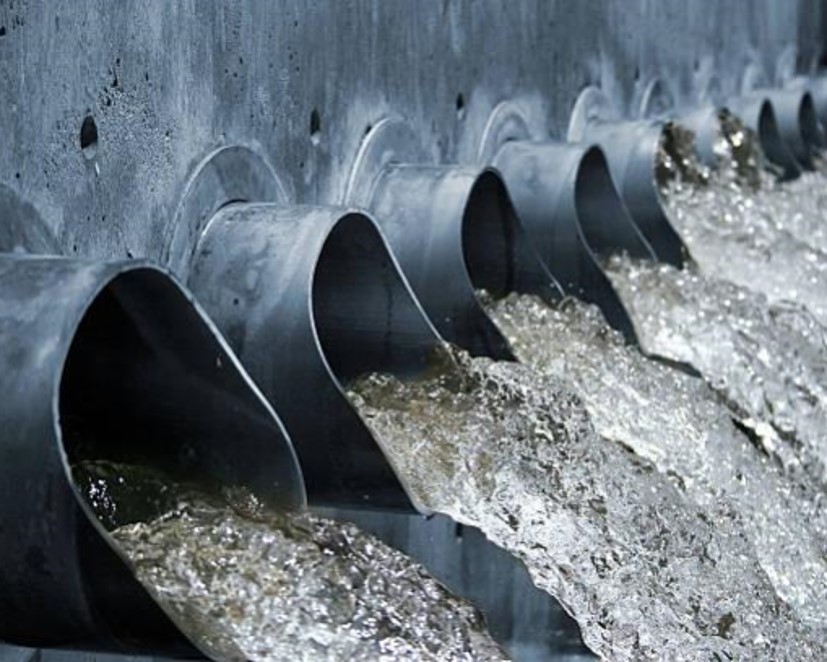
Often forgotten, wastewater represents an important component of our hydrosphere because it is the water that we interact with most intimately, and perhaps most carelessly. In this learning module, you'll learn how wastewater impacts the environment around us and how the Sustainable Blue Economy is working to improve the way we deal with our wastewater.
Explore wastewater

Six: Our Blue Future - What Next?
In this module, we will consider how information, world views, personal values, complex thinking and technology all play critical roles in helping us envision and enact a more sustainable blue future. A future where economic prosperity and well-being are achieved without compromising people, communities, cultures, or the environment. We will talk to industry players and innovative individuals, who are making careers out of solving problems and who can inspire us all to do things differently, thoughtfully and better.
Explore our Blue Future

Seven: Marine Transportation

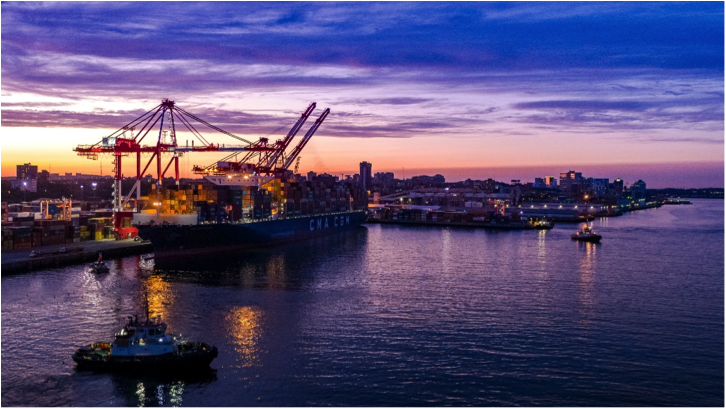
In this learning module we will explore how transportation plays a role within the Sustainable Blue Economy. Looking at the networks of moving people, this learning module will explore how, why and where we travel. Also exploring the history of transportation and how it connects us all, this learning module will introduce you to different ways we travel on water and the opportunities that exist as we become a more sustainable society.
Explore marine transportation

Eight: Explore renewable energy
While the industrialized world has spent the last few decades distracted by fossil fuels, a shift is underway to harness the abundant, renewable power within our ecosystems. This module examines how the Sustainable Blue Economy blends Indigenous Knowledge Systems and Western science to transition towards renewable ocean, freshwater, and geothermal energy. Explore how these low-emission sources are protecting our planet and reshaping the future of energy.
Explore renewable energy

Nine: Digital Technology & AI in the Sustainable Blue Economy

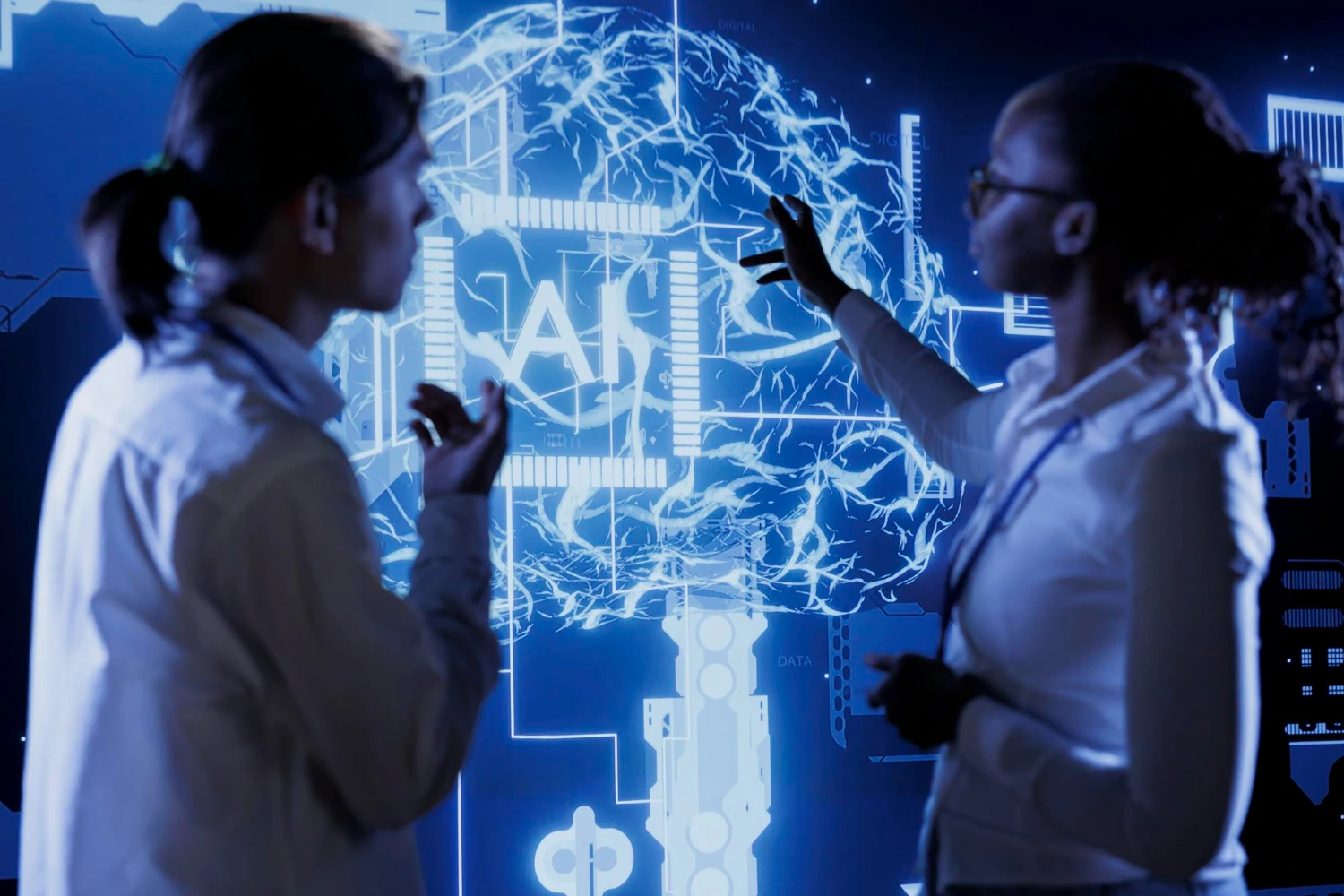
This module explores how digital technology and AI can be used to process large amounts of data to help solve the ecological challenges facing the Sustainable Blue Economy. While these tools can help bridge the gap between information and action, they also bring unique challenges that will be examined throughout this module. Discover how these advanced algorithms are driving more thoughtful, data-driven solutions in the ocean and water spaces.
Explore new digital advancements

Special Thanks

We would like to acknowledge the following people who helped create these learning resources:


Lead Content Creator: Dr. Sherry Scully


Lead Graphic Designer: Maria Gallaugher, inkbottledesign.com


French translator: Alex Gauthier


Video editors: Nicholas Castel, Maria Gallaugher


Content reviewers: Kathleen Matari, CarolAnne Black, Hailey Renaud, Ken Paul, Da Chen, Keshia Moffat and Akhil Ramdoya; with input on the 1st module by Shannon Monk and on the 4th module by Heidi Langille and Lynda Brown.