



Navigating Polar Worlds: Reflecting on Antarctica, Leadership, and Being a “Woman of the Poles”
For SOI Expedition Manager, Cécile de Sérigny, the path to Antarctica began long before she first stepped aboard the L’Austral in the Southern Ocean.
It began in France, where she was born into a family of sailors and, at five years old, she first read Apoutsiak by French explorer Paul-Émile Victor. “The Arctic has called me ever since,” she says.
Decades later, that calling would lead her across the Canadian North: studying wildlife in Nunavut, working in wildlife biology in the Yukon, collaborating with Inuit schools and communities in Nunavik, and eventually finding a place at the Students on Ice Foundation.
In 2026, her journey took another turn, this time southward, when PONANT EXPLORATIONS invited her to join the “Women of the Poles” initiative as a guest host and speaker on an Antarctic expedition aboard L’Austral.
Women of the Poles is a collaborative campaign led by the French polar think tank and NGO Le Cercle Polaire, founded in 2006 by Laurent Mayet to bring together diverse people to foster better understanding and protection of the Polar Regions.
Aligned with the United Nations 2030 Agenda for Sustainable Development and its goal of achieving gender equality (SDG 5), Women of the Poles is designed to spotlight women explorers, scientists, photographers, and adventurers working in Arctic and Antarctic environments — fields historically dominated by men. It celebrates women’s contributions to polar regions while helping create pathways for future generations of women and girls to lead in science, exploration, conservation, and education.
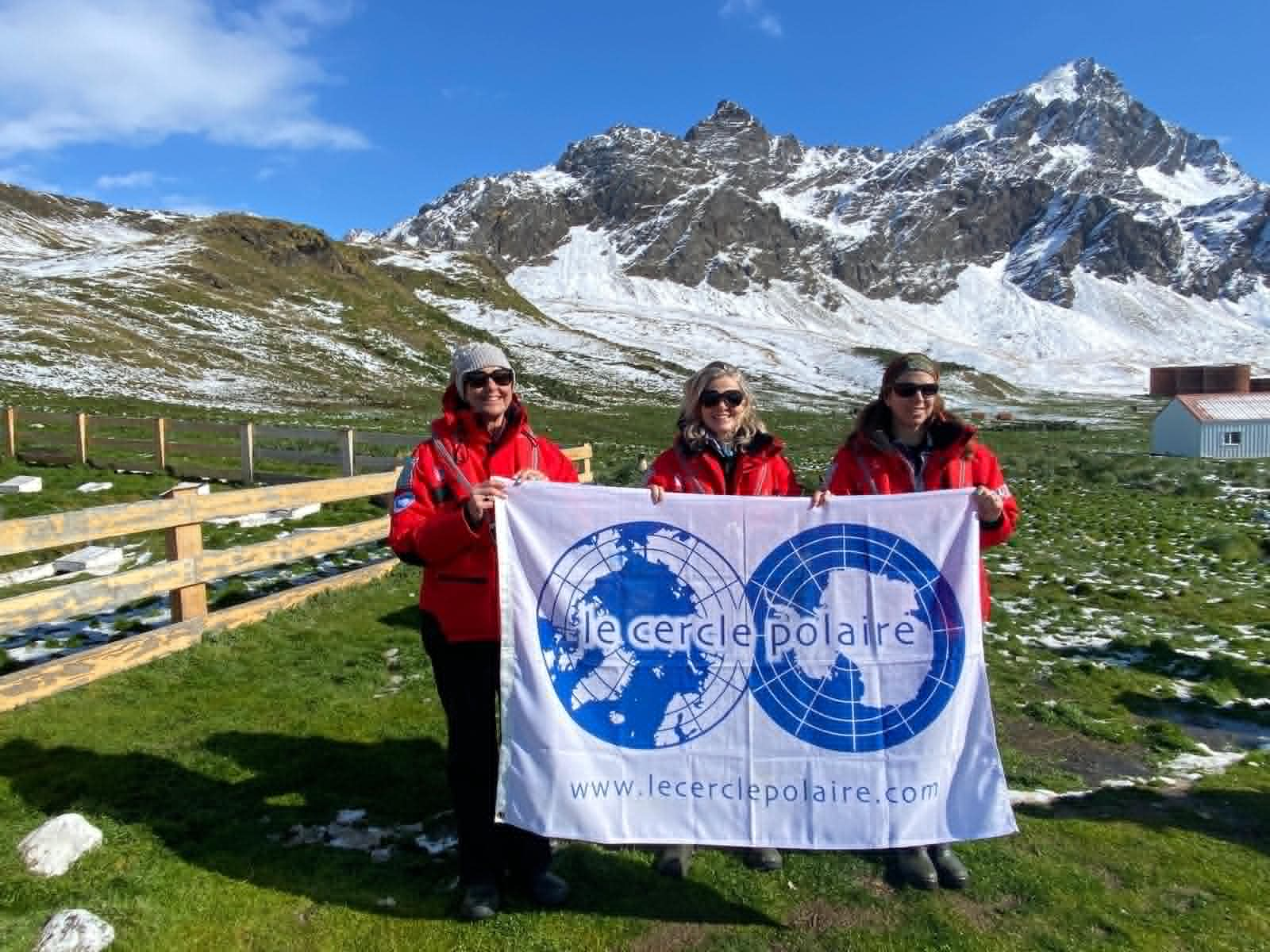
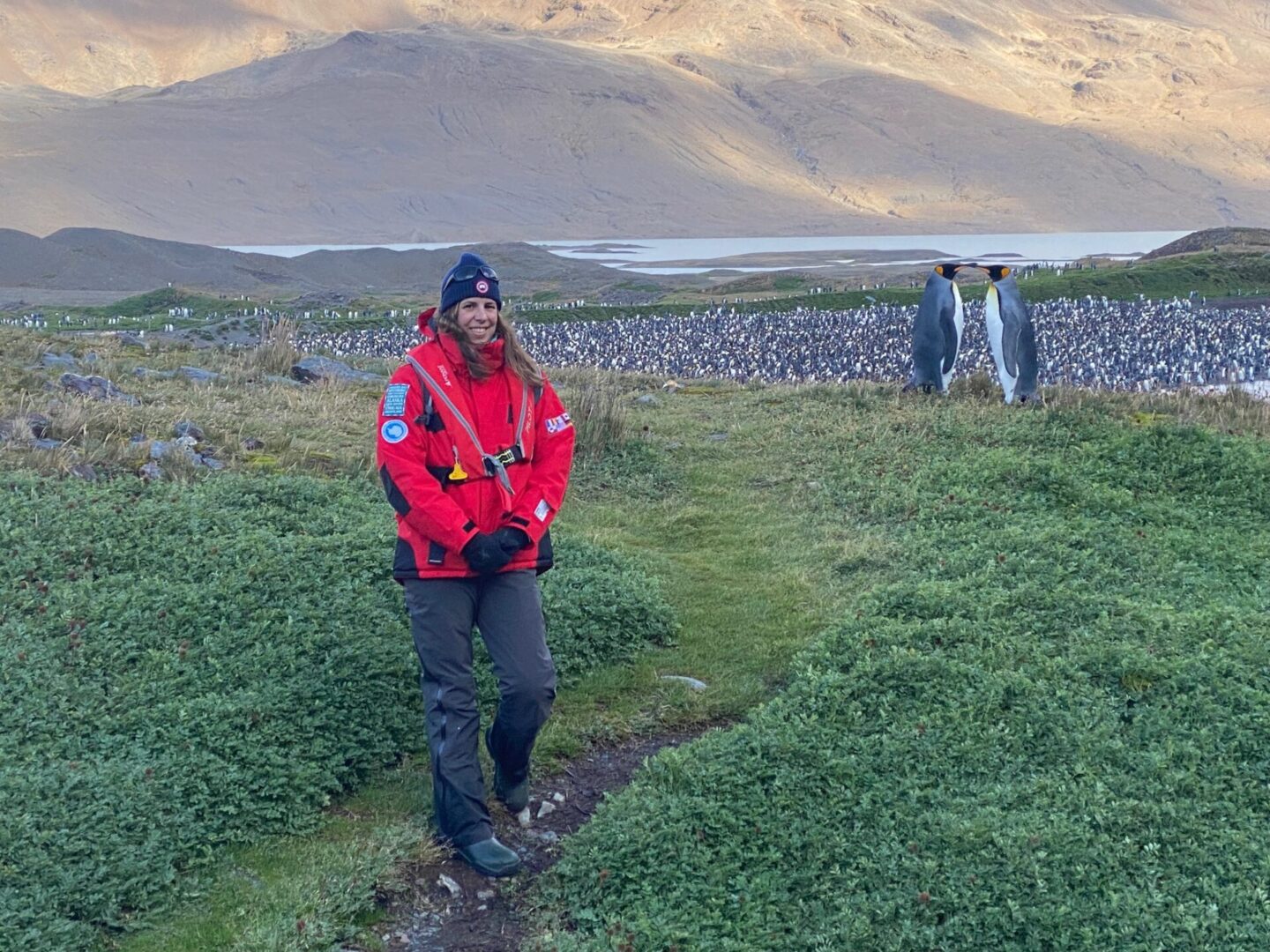
The voyage, dubbed Journey to Austral Lands and Valdes Peninsula, took her from Ushuaia to the Antarctic Peninsula, to South Georgia, the Falkland Islands, and Patagonia before disembarking in Buenos Aires. It brought together travellers, naturalists, historians, and polar experts to experience some of the most ecologically significant regions on Earth.
But for Cécile, Antarctica was never simply a destination. It was a place to reflect on what exploration means today and what it should become.
From fascination to fieldwork
Cécile’s relationship with the Arctic is shaped not only by wonder but by lived experience.
After studying wildlife management at the Université du Québec à Rimouski, she moved to the Yukon to live off-grid, improve her English, and work as a sled dog guide.
Later, as a wildlife technician in Nunavut, she spent long days conducting field research on geese and Arctic foxes.
“These were formative years,” she reflects. “Learning to set boundaries in a male-dominated team and proving women can drill, drive boats, and lead.”
Over time, she came to understand that the Arctic was asking something deeper of her.
“The Arctic was not testing my strength,” she says. “It was testing my resilience.”
A Shift in Perspective
Those early years also forced Cécile to confront difficult questions about the legacy of research and exploration in the North. While conducting scientific work on Inuit lands, she began to recognize the absence of Inuit voices in many research processes.
“Something was missing,” she says. “We worked on Inuit land without Inuit voices. I had to change that.”
Her move to Kuujjuarapik in Nunavik marked a turning point. Working directly with Indigenous schools and communities, she began to understand the deeper historical context surrounding qallunaat — non-Inuit southerners — working in the Arctic.
“Moving to Kuujjuarapik was an incredible learning experience, but also a humbling one,” she explains. “As a qallunaat researcher arriving from the South, I had to recognize that people sometimes saw not just me as an individual, but also the long colonial history that came with someone like me working in the North.
“There was a gap in understanding the effects of that past among many scientists and researchers.”
Those realizations fundamentally changed how she approaches expedition work, science, and leadership.
“Those experiences were uncomfortable at times,” she says. “But they were also some of the most important lessons of my life.”
Creating Spaces for Shared Learning and Leadership
Today, much of that philosophy informs her work with the Students on Ice Foundation, where she helps lead Arctic expeditions bringing together Indigenous and non-Indigenous youth, Elders, scientists, artists, and educators.
As Expedition Manager, she oversees scientific activities, land-use permits, educator onboarding, and participant learning journeys — helping shape educational experiences grounded in collaboration, reciprocity, and Indigenous knowledge.
“On board, something remarkable happens,” she says. “Elders share stories. Scientists share knowledge. And young people begin to see that their voice belongs in conversations about the future of the North. My role as Expedition Manager is to help create those spaces — spaces where listening matters as much as leading.”
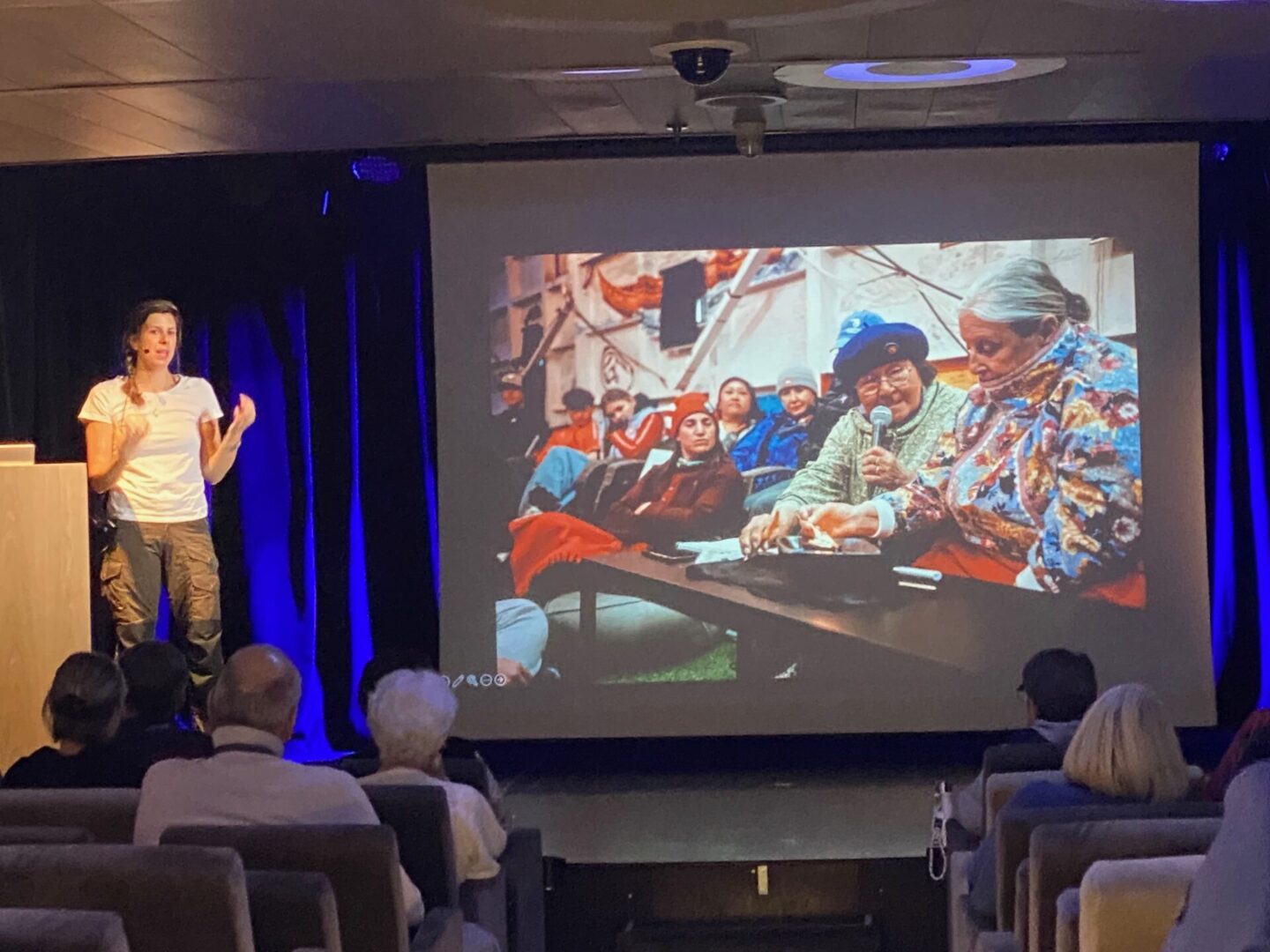
That perspective resonated strongly aboard PONANT’s Antarctic expedition, where travellers crossed some of the most storied regions of the Southern Ocean. Against the backdrop of glaciers, icebergs, and vast Antarctic seascapes teeming with life, Cécile shared not only stories of the North, but reflections on how exploration itself is evolving.
“In the past, exploration often meant conquering territories,” she says. “Today, it is much more about building bridges and creating reciprocal relationships.”
What it means to be a “Woman of the Poles”
As part of the “Women of the Poles” initiative, Cécile joins a growing international community of women redefining leadership and representation in polar spaces. For her, the title carries responsibility as much as symbolism.
“Being a polar woman is about challenging norms, opening paths, and ensuring the Arctic is a space where all voices — especially those of Indigenous women and girls — can lead.”
Her reflections align closely with the goals of the initiative, which seeks to elevate women’s contributions to polar exploration, science, education, and environmental stewardship.
“I came back from this experience with a new perspective on my work and my life; one shaped by the realization that, regardless of where we come from—our countries, backgrounds, or professional fields—we share the same challenge of balancing personal life with the call of the field, while navigating a world that remains largely male-dominated,” Cécile says.
But Cécile’s interpretation is rooted less in individual achievement than in collective empowerment.
“For me, being a ‘polar woman’ means reclaiming space, amplifying others, and believing that true empowerment starts with listening, humility, and shared leadership.”
Those values shaped her conversations on board L’Austral, where guests engaged in deep discussions about climate, history, gender, Indigenous knowledge, and the future of exploration itself.
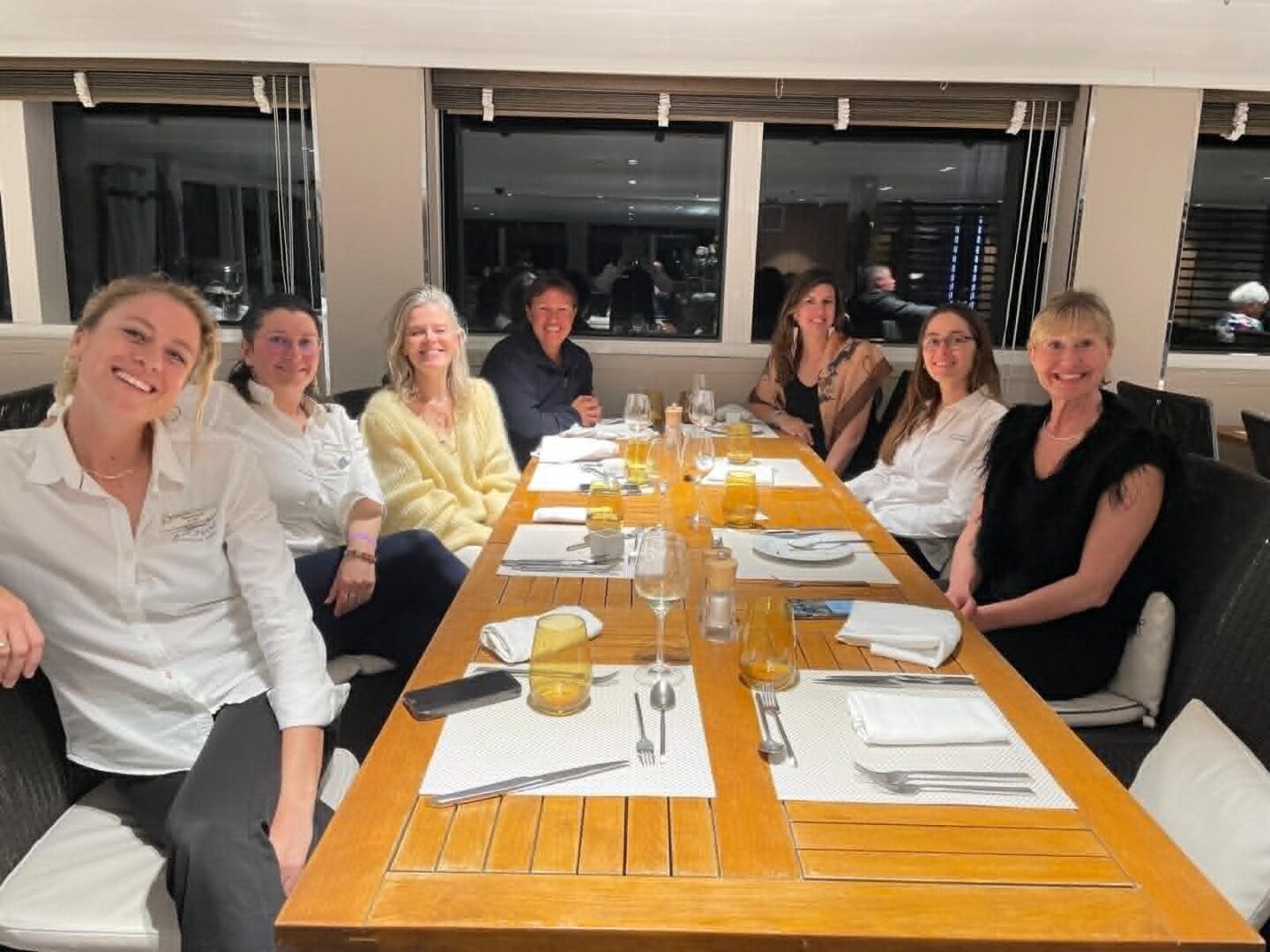
She had the opportunity to connect with other women of the poles, like English explorer Fiona Thornewill and business leader and climate change advisor Laura Lemaitre, both of whom have extensive experience in Antarctica and the Russian Arctic.
“Sharing space with them was incredibly meaningful,” Cécile says. “We exchanged openly about our realities and the unique challenges of being women in a field. For me, it was the first time I truly felt that this part of my life was fully understood. We spoke about things that are rarely expressed—like the sense of disconnection when you come back home, that can follow long periods in the wilderness.”
These exchanges created an open and supportive space where all the female professionals onboard, including naturalists and Zodiac drivers, could share their experiences.
“We brought together women working in the field to discuss our professional realities, the challenges, successes, and ways of supporting one another in demanding environments,” she says. “These exchanges were powerful and deeply human. It also created space for more vulnerable, deeper conversations that are so often left unspoken.”
Antarctica as a mirror
For many travellers, Antarctica represents the edge of the world — remote, silent, and seemingly untouched. For Cécile, it was also a place that afforded her deep reflection.
A place where old narratives of conquest and heroism can be reconsidered. A place where new generations can imagine different relationships with the polar regions, with the people who live there, and with one another.
It is perhaps fitting that her journey, which began with childhood dreams of Arctic adventure, has evolved into something far more expansive.
Not the pursuit of domination over remote landscapes, but the creation of spaces where people learn to listen to them—and to each other.