




North-to-North Expedition 2026: Update 5
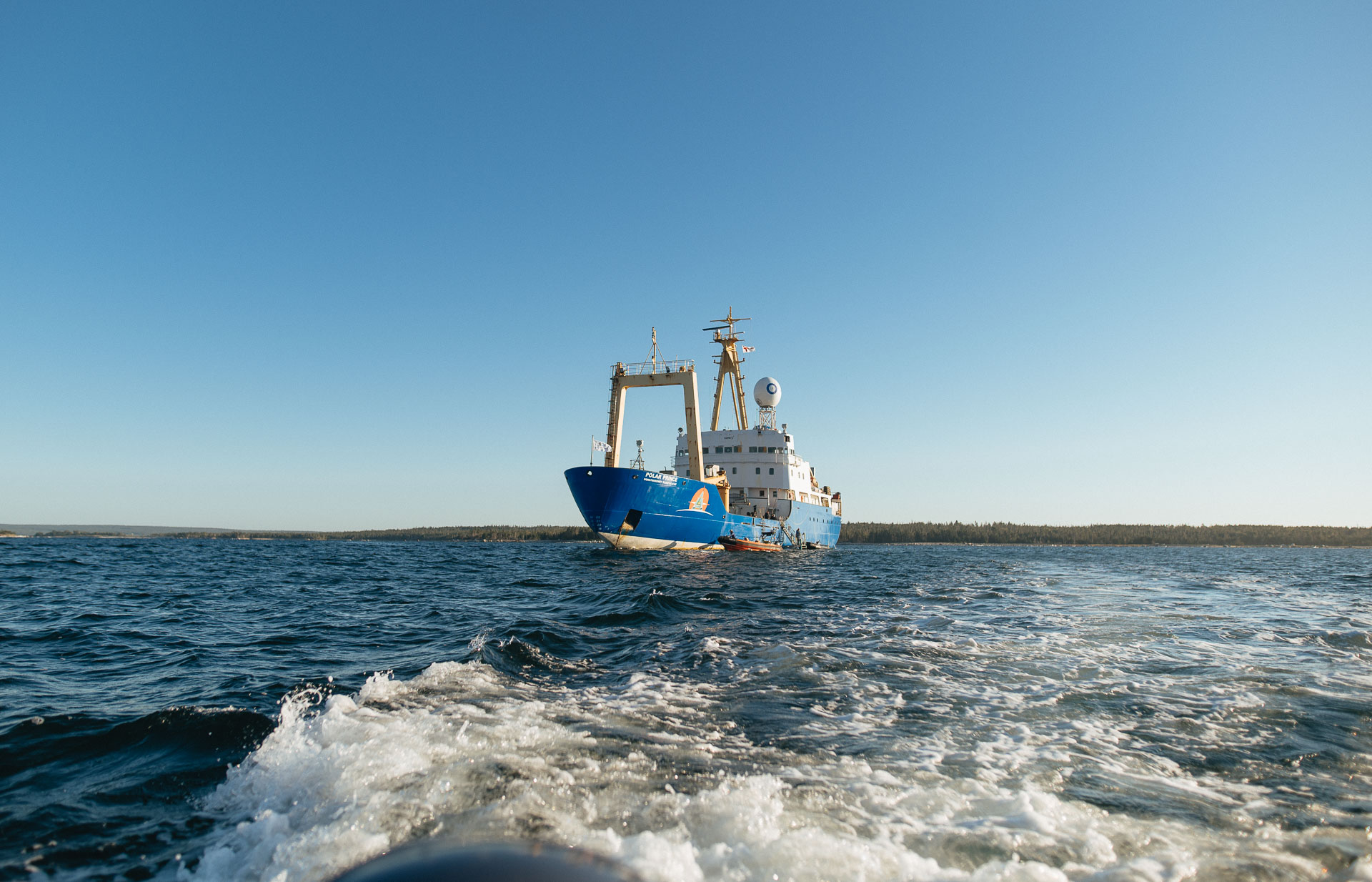
After pulling anchor from Eclipse Sound and leaving the Torngat Mountains behind, the North-to-North Expedition set its course north across the sea toward our final destinations: Baffin Island and Iqaluit, Nunavut. This final part of our journey focused on the history and governance of Canada’s newest territory, hands-on environmental science, and reflections on our shared experiences as a circumpolar cohort.
Monday, July 20
As the MV Ocean Nova sailed north toward Nunavut, the cohort gathered in the lounge to learn about our upcoming destination from those who call the region home. Nancy Karetak-Lindell and Aasiva Nakashook co-led an introductory presentation on Nunavut and its capital, Iqaluit. They explained that the territory, which officially split from the Northwest Territories in 1999 to become Canada’s third territory following a referendum, is home to 40,000 people across 25 fly-in communities, with Inuit representing 80 percent of the population. Nancy and Aasiva shared how this historic transition allowed Inuit to see themselves represented in public government, adapt laws to accommodate traditional customs, and decentralize government departments across different communities rather than keeping them in a single hub. Describing this journey as charting “footprints in new snow,” they also discussed the modern challenges of this vast region, which relies on only two hospitals and requires residents to fly south for specialized healthcare.
Turning their focus to Iqaluit—which translates to “place of many fish”—the presenters described the capital’s population of 9,000 people, noting that it is 60 percent Inuit, with English spoken more widely than Inuktitut. The community is fly-in-only and runs on diesel fuel brought in by sea, while perishable foods must be flown in. The group discussed how recent developments, such as the arrival of Starlink and the construction of a deep-sea port, have significantly changed daily life in the capital.
Following the morning presentation, the shipboard program branched into several specialized workshops. Climate scientist Mo led a discussion on the changing landscape of clean energy and the challenges of misinformation. She addressed how special interest groups, including the fossil fuel industry, generate misleading narratives, and emphasized the critical role of scientific literacy in helping individuals understand science and educate themselves.
In another circle, Gunn-Britt moderated a panel featuring Sámi youth participants Vesa Orassalo, Máret Michelsen, Emilie Biti-Jessen, Eline Sandvik, and Lovisa Utsi. Emilie began the session with a brief introduction to Sámi culture, and each panelist shared personal stories about their lived experiences and how they navigate daily Sámi life.
Archaeologist Emma Gilheany hosted a public history writing session with the goal of drafting two articles for Them Days, a periodical documenting stories of early Labrador. The first article, focused on Labrador fur trapping, was led by Maiyuraq Nanouk Jones and Priscilla Frankson, who grew up in trapping families and brought their personal connection to the task. They detailed the trapping history of our bear guard Harvey Blake, outlining how he gathered furs and how his wife crafts clothing and hats from them. The second article compiled the cohort’s collective reflections on their time on the ship and in the Torngat Mountains so that Labradorians can read and share in their experiences. This group set the goal of completing and submitting both pieces by the end of the expedition.
Geologist Peter Croal hosted a session titled “Geology, Mining, and Reconciliation,” providing an overview of mineral formation and the logistics of the mining industry. Peter put a heavy emphasis on the concept of reconciliation, explaining that community consent, active engagement, and local support are just as vital to a project’s viability as the geological ore body itself. He noted that without local consent, a mining project is worthless and will not secure backing from investors, connecting the discussion back to the Tanbreez mining project the group visited earlier in South Greenland.
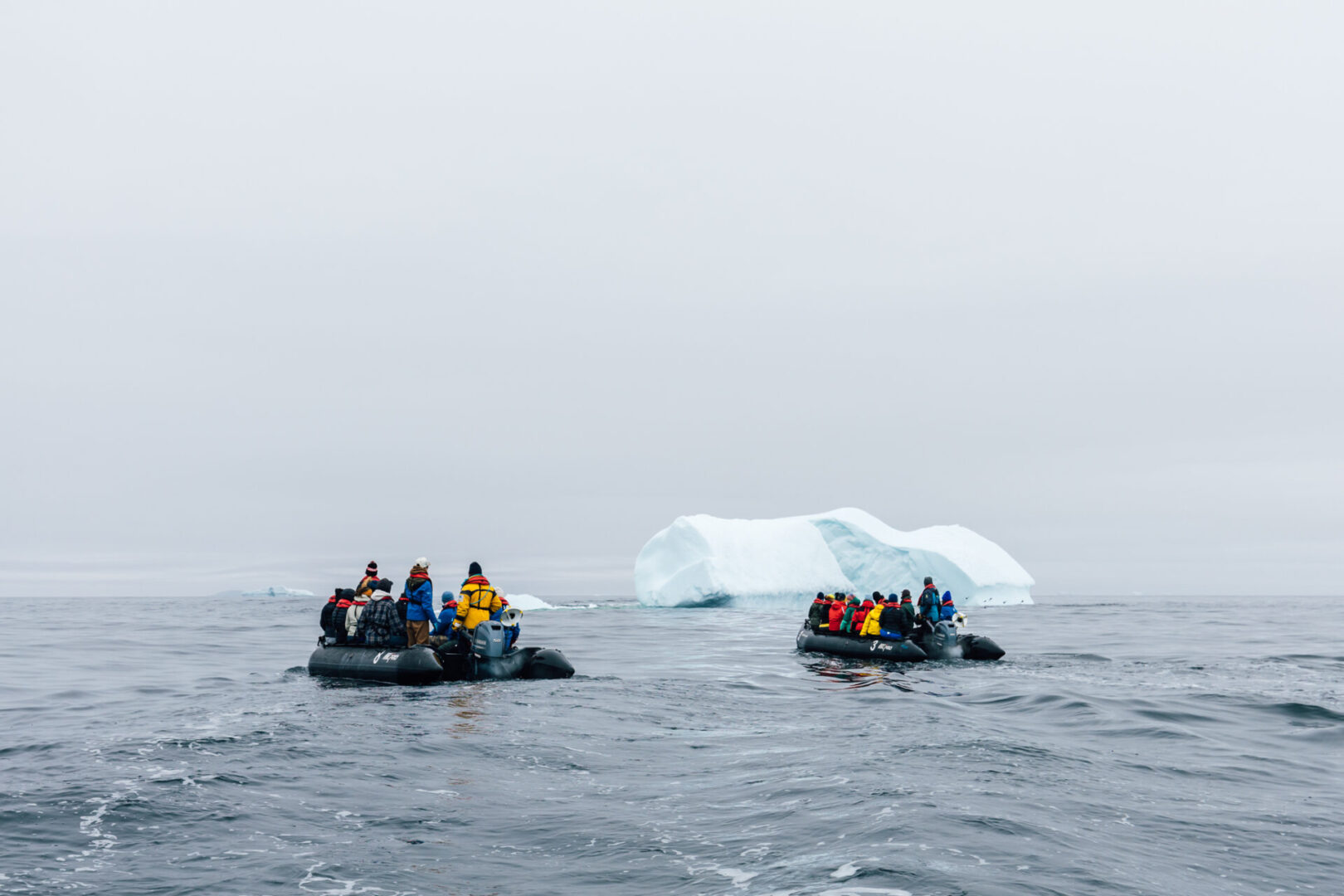
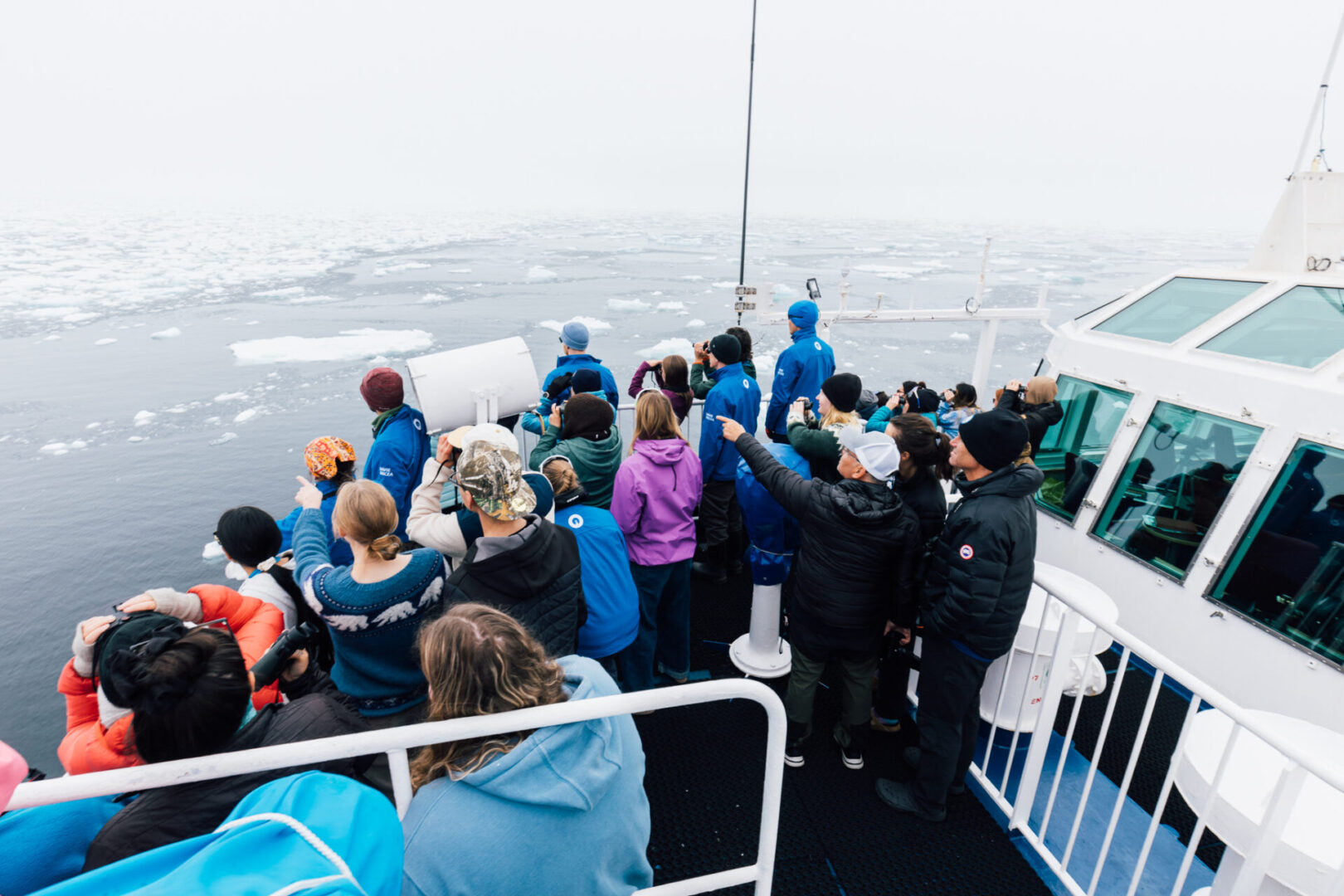
In the afternoon, conditions allowed the cohort to board Zodiacs for a cruise along the sea ice edge—a rare opportunity dependent entirely on the day’s weather and ice conditions. The group observed a walrus and spotted multiple polar bears in their natural habitat. Reflecting on the sighting, Geoff Green remarked, “That is their habitat, that is where they want to be… Where they should be.” Upon returning to the ship, participants gathered in the Panorama Lounge to watch the ice edge glide past, spotting several more polar bears along the way.
Before dinner, the youth participated in a Students on Ice tradition by writing letters to their future selves. These personal reflections were sealed in self-addressed envelopes. The Foundation will mail them back to each participant exactly one year later to help them reflect on their personal growth and experiences during the journey.
Tuesday, July 21
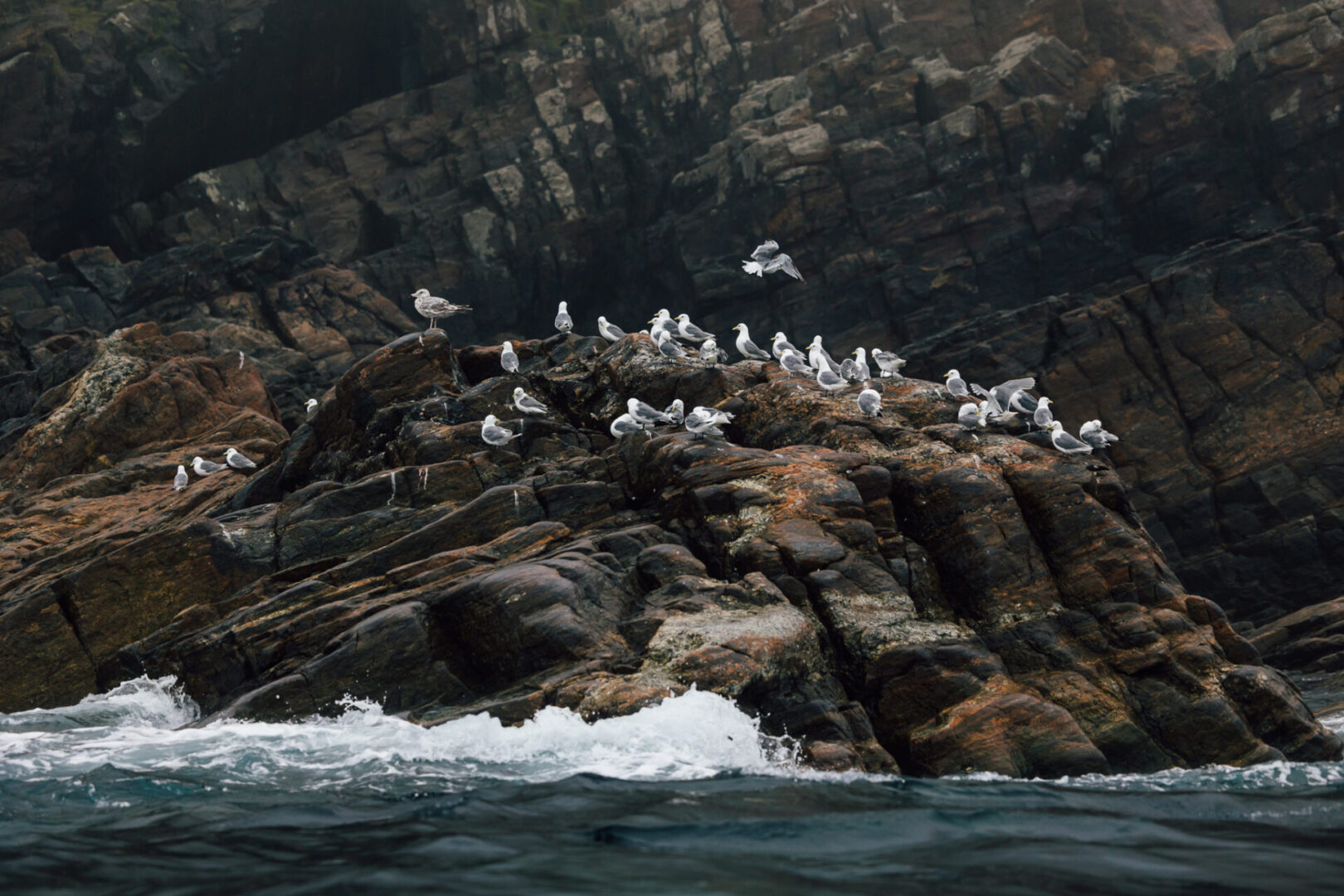
On Tuesday morning, the ship navigated close to Hantzsch Island using sonar technology, where the cohort boarded Zodiacs to approach the protected shores. Designated as an Important Bird Area, the island is home to a large population of nesting seabirds. From the Zodiacs, the group observed thick-billed murres, black-legged kittiwakes, northern fulmars, and a few puffins. Some of these birds nested directly on the bare rock of the steep cliffs, while others built their nests out of vegetation.
One of the Zodiacs was dedicated to the science team, focusing on marine biology and ocean acoustics. Scott Carr led a session on underwater acoustics, demonstrating how specialized equipment is used to monitor noise from human activities. Using an ocean sound meter provided by JASCO Applied Sciences, participants took turns listening to real-time audio captured from beneath the surface. Biologist Paul Hamilton conducted a net haul. When the net was brought up, the group examined the golden-brown algae inside, learning how the high volume of bird droppings on the island acts as a natural fertilizer to stimulate these blooms.
Upon returning to the vessel, the crew pulled anchor and began sailing toward Iqaluit, our final destination. During the transit, Lynda Brown and Scott Pynn co-led an afternoon session on the Students on Ice Alumni Program. They introduced the youth to the support network, professional development opportunities, and regional initiatives available to them after the expedition, such as the Arctic Policy Cohort, the Alumni Council, and international delegations. They also spoke candidly about the transition of returning home, often referred to as the “post-expedition blues,” and reassured the cohort that the foundation provides ongoing support.
Later in the afternoon, youth participants Priscilla Frankson and Vesa Orassalo presented on Project CREATES, a digital storytelling initiative under the Arctic Council’s Sustainable Development Working Group. They screened a selection of short films produced through the project and discussed how circumpolar youth can engage directly with the Arctic Council. Priscilla and Vesa emphasized the importance of ensuring that the Council’s initiatives directly benefit and represent the people living in the Arctic.
Trevor Wallace followed with a presentation on the Explorers Club in New York City, an international organization that shares a commitment to research and field science. Trevor highlighted the club’s networking opportunities and grant programs, noting that several Students on Ice alumni are also fellows of the club, and encouraged the youth to explore these resources.
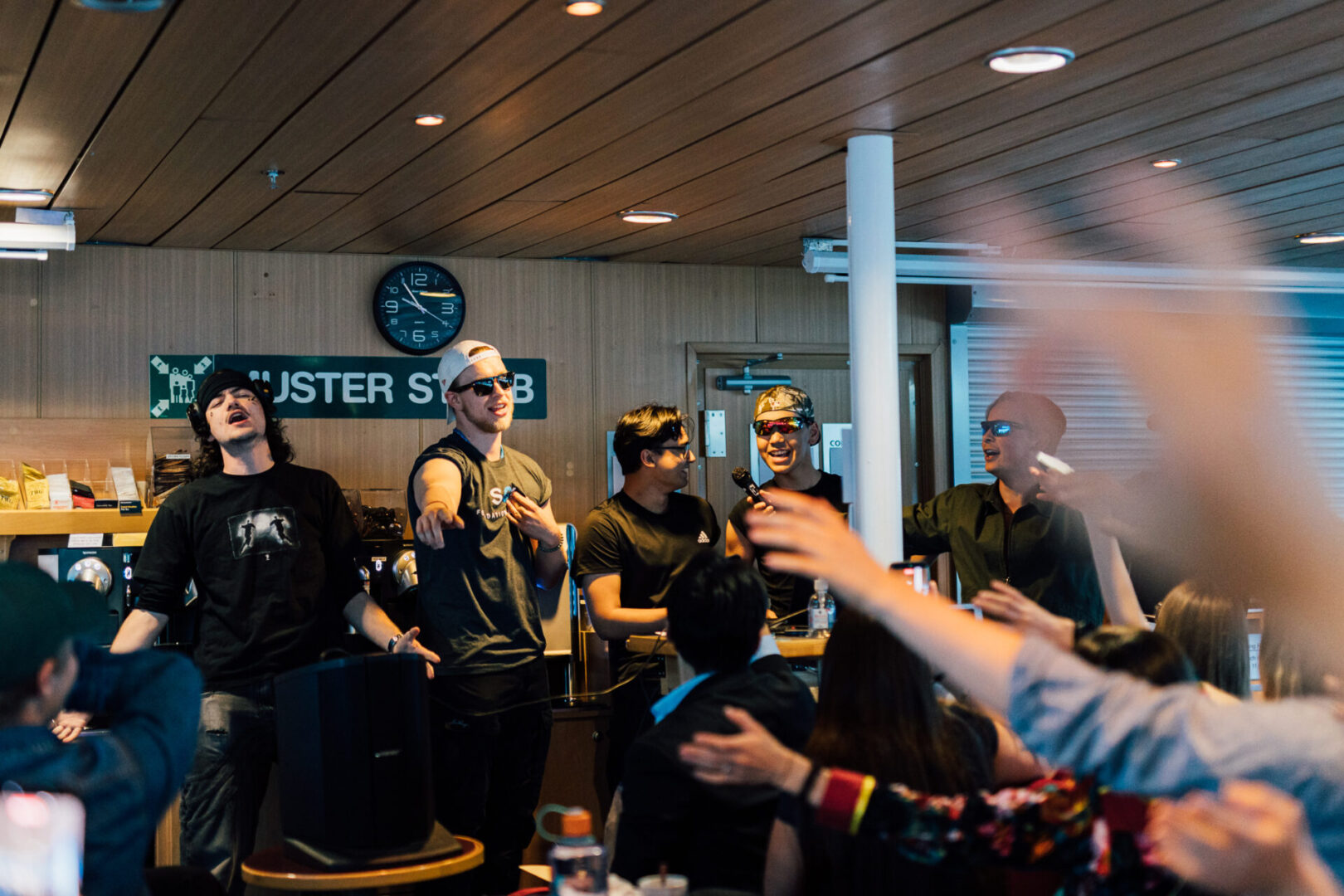
At our final shipboard dinner, the entire cohort stood to give the kitchen staff a standing ovation to express gratitude for the meals prepared during our weeks on board. The energy carried into our final night on the vessel with the traditional talent show, which began with a lighthearted roast of Geoff Green. Youth participants took turns as master of ceremonies, guiding the room through an evening of original poems, songs, group dances, and special appearances. After the formal performances concluded, the youth continued the celebration with a late-night dance party in the lounge, marking a high-energy end to our final full day on the ship.
Wednesday, July 22
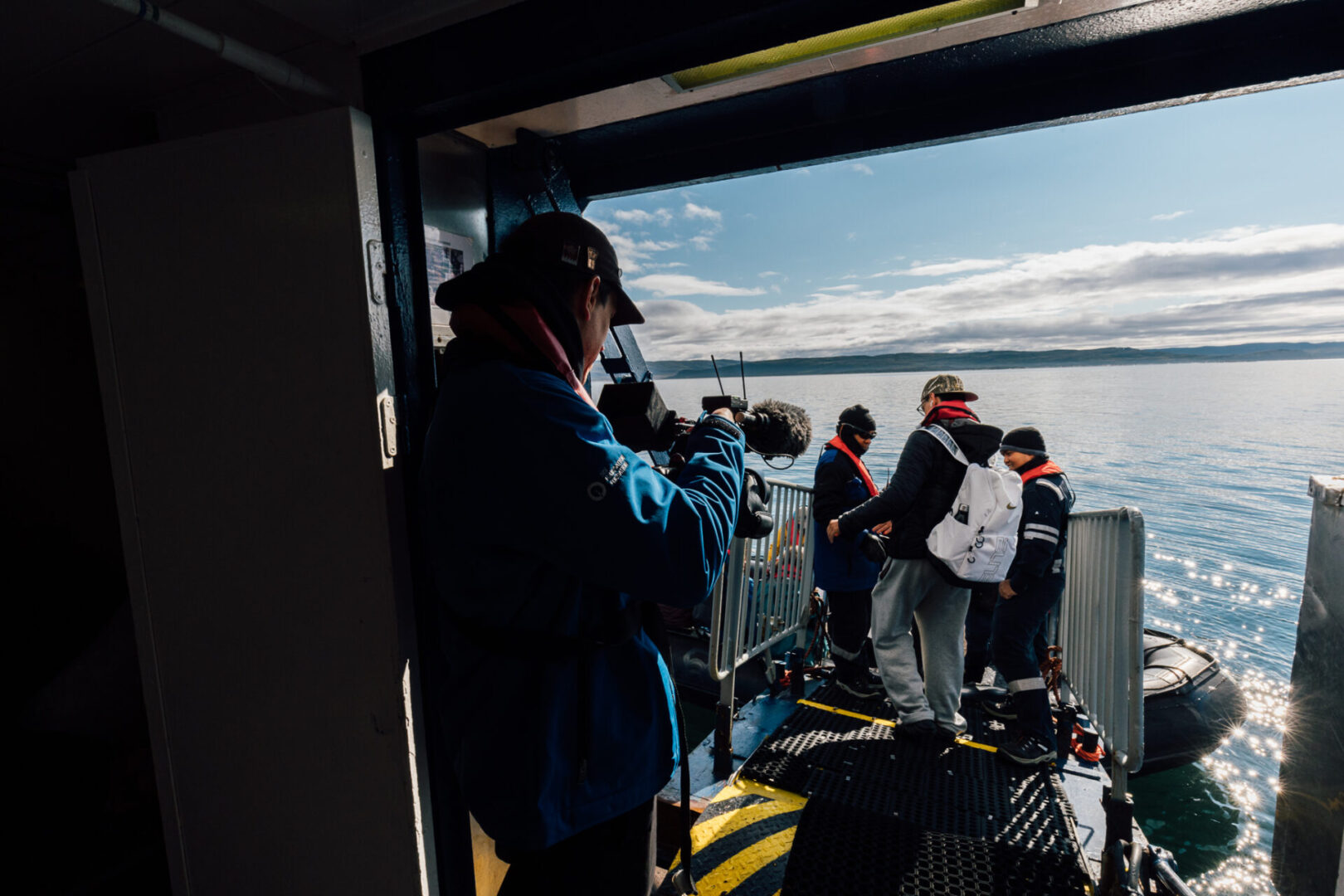
The final morning of the expedition began early as the MV Ocean Nova positioned itself just outside the harbor of Iqaluit. With our luggage packed, the cohort loaded into Zodiacs for one last ride to shore, officially setting foot in the capital of Nunavut. After boarding a bus into town, participants spent two hours exploring Iqaluit, purchasing souvenirs, and enjoying local snacks.
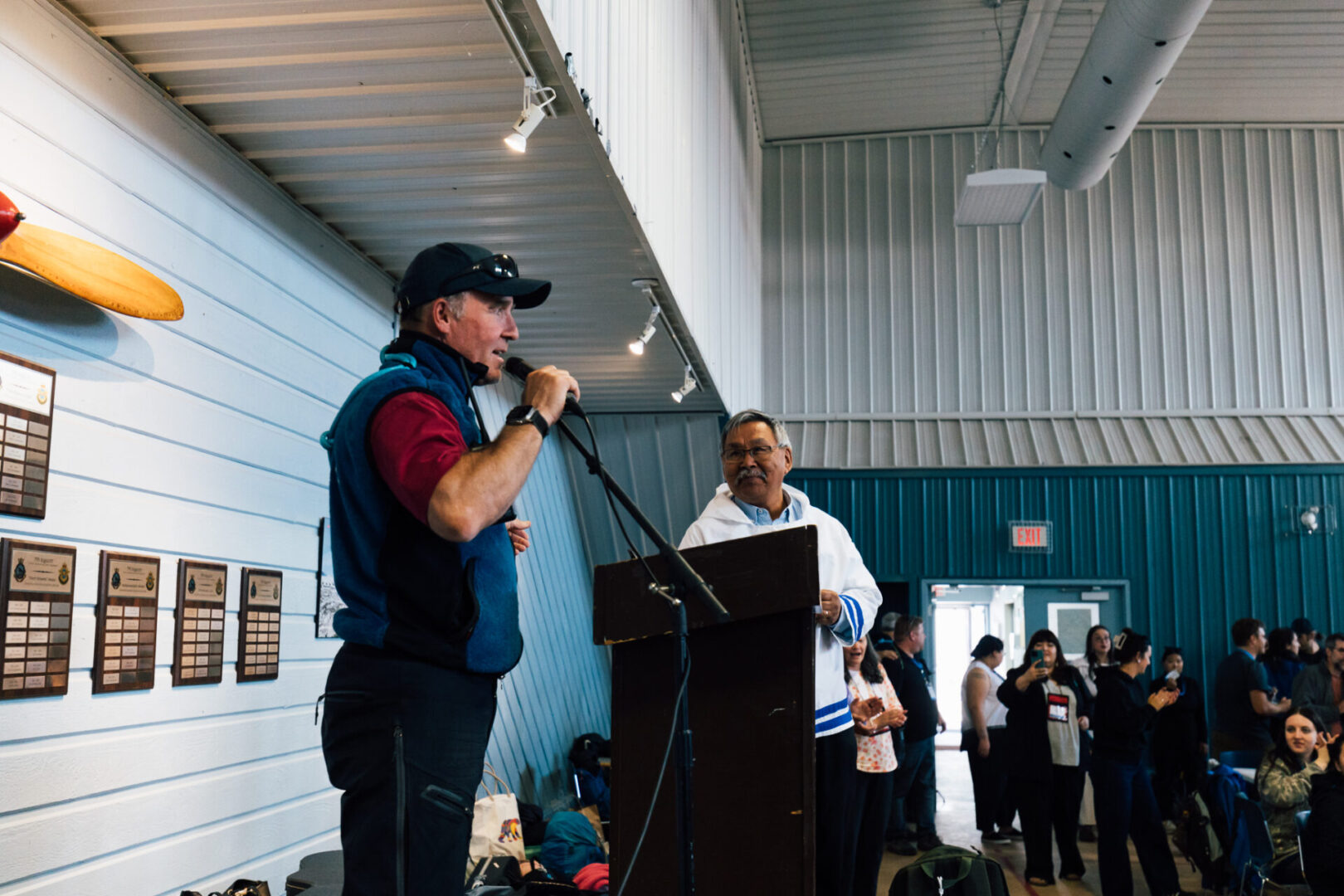
The group gathered at the Cadet Hall for a transition ceremony, where they met the incoming cohort of youth who would board the vessel to begin the reverse journey back to Greenland. Ann Hanson, an Elder, welcomed the group with a few words and a song. The gathering also featured remarks from three Inuit Circumpolar Council (ICC) youth delegates, including Canada’s Gwen Natsiq, alongside Inuit Tapiriit Kanatami President Natan Obed. The ceremony was attended by several distinguished guests, including Canada’s Arctic Ambassador Virginia Mearns and Nunatsiavut President Johannes Lampe. Educators Camilla Aviaja, Gunn-Britt Retter, and Nancy Karetak-Lindell also returned to the hall to say their final goodbyes to the youth. To close the session, youth participant Sherise Tunguaq shared a few words of gratitude that brought laughter to the room, before Geoff Green delivered his final closing remarks to conclude the official programming of the 2026 North-to-North Expedition.
As the formal programming of the 2026 North-to-North Expedition came to a close, the space in Cadet Hall filled with emotional conversations, long hugs, and tears. After two weeks of living, learning, and navigating the waters of Greenland and Canada side by side, the cohort had transformed from a group of near-strangers into a tight-knit expedition family. Saying goodbye to the peers, mentors, and the floating home we had shared was difficult, but as the youth boarded the flight back to Ottawa to disperse to their respective homes, they did so carrying lifelong connections. While the physical voyage has ended, their journeys as the newest members of the global Students on Ice alumni network are only just beginning.