



Architects of the Arctic’s Future: SOI Delegation at the 2026 Arctic Circle Assembly
The 2026 Arctic Circle Assembly in Reykjavík, Iceland, has brought its three-day gathering of global leaders, researchers, diplomats, and Indigenous representatives to a close. Among the 2,500 international participants at Harpa Centre was a dedicated 10-person delegation from the Students on Ice (SOI) Foundation. Backed by Global Affairs Canada (GAC) and the Global Arctic Leadership Initiative, this cohort brought together six Indigenous and Northern youth leaders alongside four SOI staff members.
Rather than participating strictly as observers, SOI delegates and alumni took centre stage across the assembly—co-organizing panels, moderating sessions, addressing diplomatic roundtables, and ensuring that Northern lived experience directly informed global Arctic governance.
The delegation’s journey converged in Toronto, where the youth and staff gathered for the first time. After connecting over lunch, the group boarded their evening flight to Reykjavík together, landing early the next morning. Following breakfast in the city and a relaxing afternoon to recharge from overnight travel, the cohort set out to ground themselves in Iceland’s natural history before entering the conference halls.
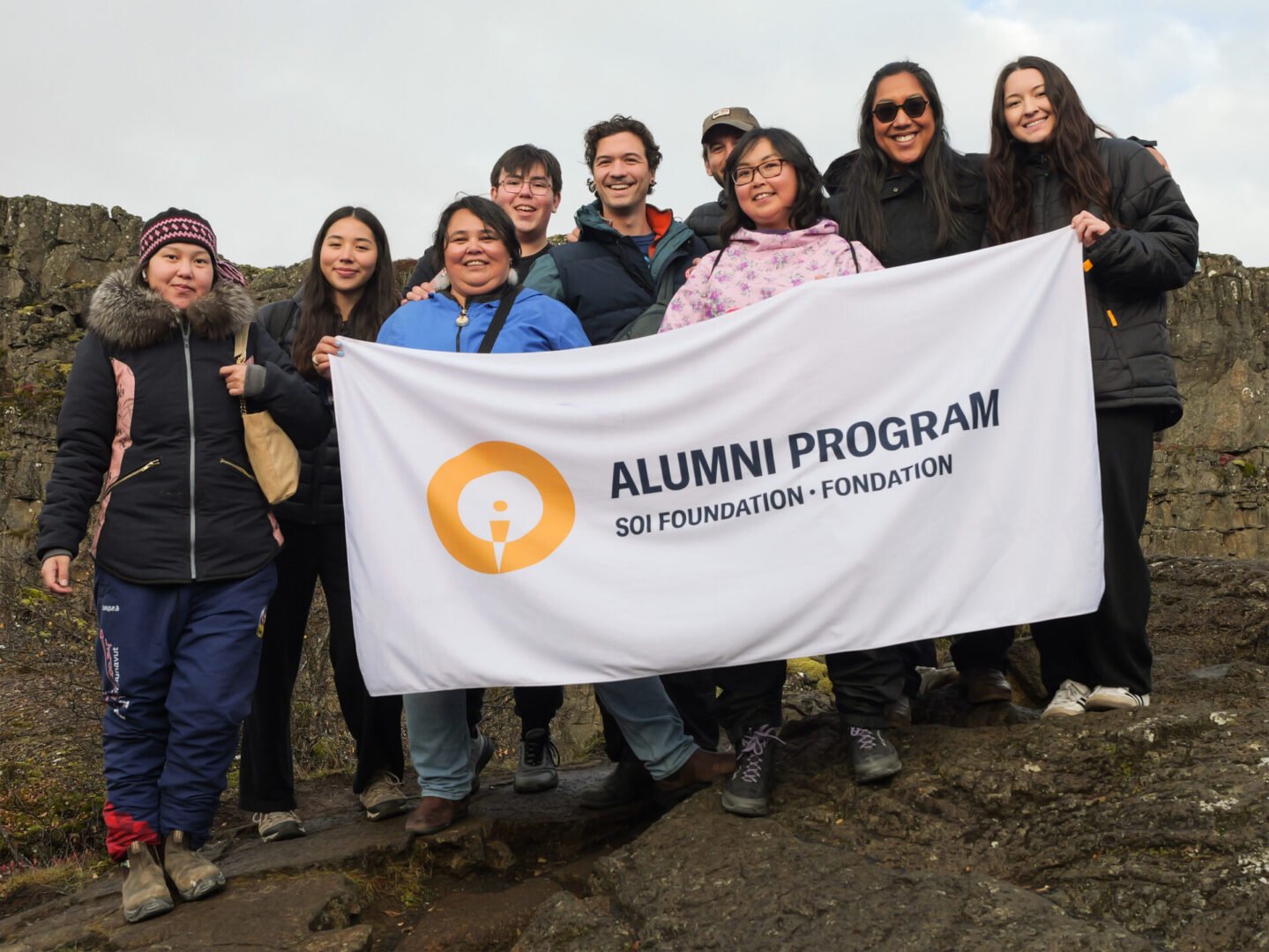
The delegation embarked on a land tour of Iceland’s iconic Golden Circle. Guided through the landscape, the team visited Þingvellir National Park, a UNESCO World Heritage site where the Eurasian and North American tectonic plates visibly pull apart—and where Iceland’s Althingi parliament was established around 930. Standing at this site of both geological divergence and democratic history offered a meaningful foundation for the diplomatic dialogues ahead.
Continuing across the Golden Circle circuit, the group observed the roaring two-tiered cascades of Gullfoss Waterfall, witnessed the active eruptions at Strokkur Geysir blowing water nearly 40 metres into the air, and peered down into the steep 55-metre volcanic caldera of Kerið Crater. Connecting geological realities to community governance reminded the delegation that any discussion on the Arctic’s future must begin with a deep respect for the land, water, and people.
DAY 1
The delegation stepped straight into the assembly at Harpa Centre on opening day, diving into critical discussions surrounding Northern investment, early-career access, and maritime governance. During the opening plenary, former Icelandic President and ACA founder Ólafur Ragnar Grímsson welcomed delegates, noting that the assembly’s success rests on its participants. He celebrated the rising, self-directed presence of youth holding institutions accountable – a message that resonated with our youth delegation. Leaders from Canada, Greenland, the European Union, the Faroe Islands, and Alaska shared priorities ranging from regional sovereignty to sustainable infrastructure.
Investment and Partnership in the North
In the session “Investment and Partnership in the North,” discussions highlighted how Arctic resource development and critical minerals must transition away from older extraction models. Panellists emphasized that future economic frameworks must involve local workforces early, build long-term local capacity, and address foundational infrastructure gaps in health, education, and energy. As the panel noted, economic development cannot come at the expense of local people and culture, and true partnership requires rebuilding trust between governments, industry, and Indigenous communities.
Arctic Early Career & Youth Engagement
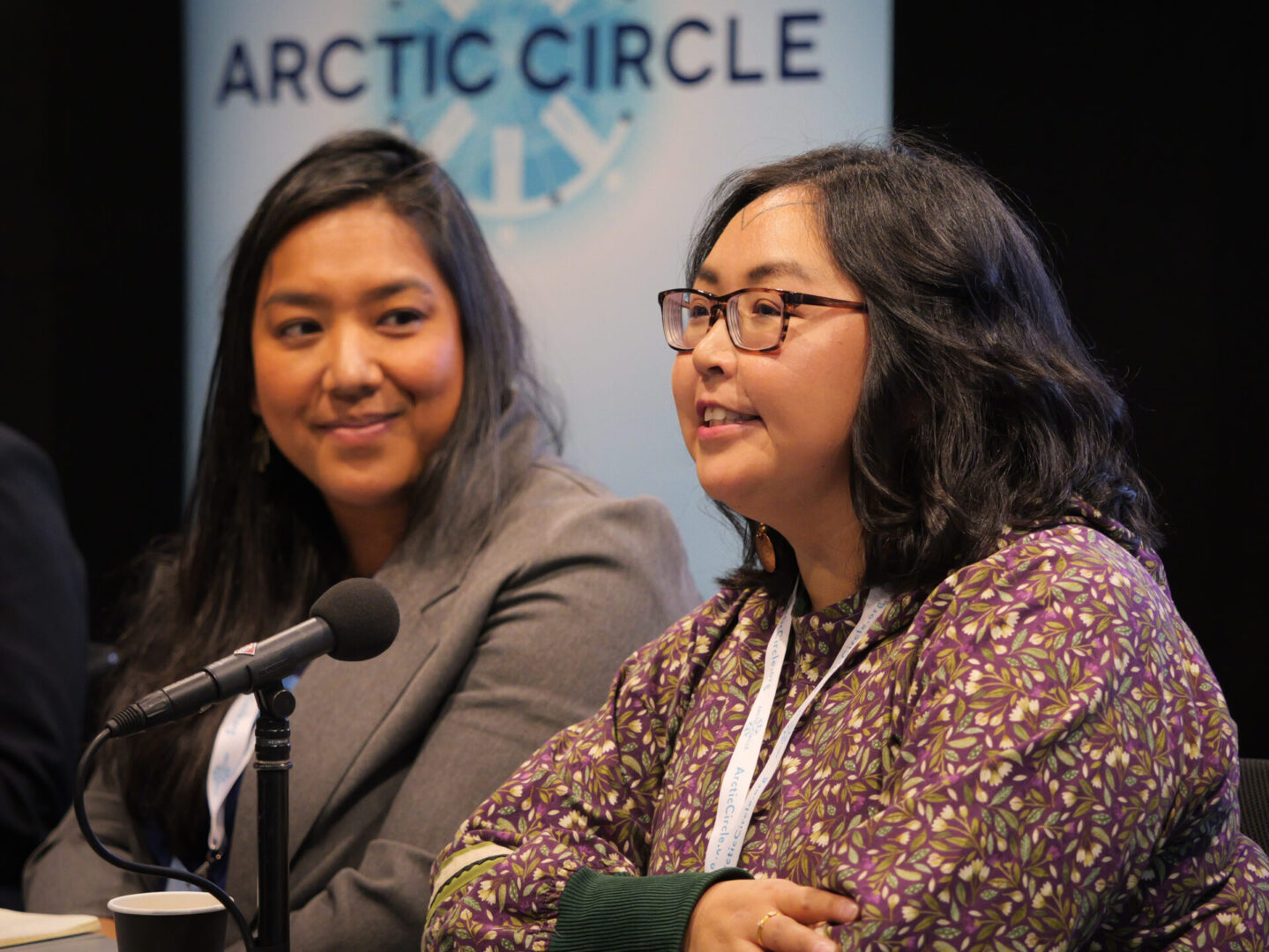
SOI co-organized “From Atop the Pole: Arctic Early Career & Youth Engagement” alongside the UK Polar Network, KoARC, and APECS Korea. When Mitchell Sallis was unable to present, delegate Priscilla Nordstrom volunteered as a last-minute co-presenter alongside SOI Program Manager Anna Naylor—delivering a compelling message on breaking barriers.
“I was so proud to watch Priscilla step up and share her voice and perspective with the Assembly. Stepping onto an international stage on short notice takes real courage, and I think she even surprised herself with how naturally she commanded the room.” — Lynda Brown, Alumni Team Lead
Priscilla highlighted education as a vital foundation for stepping into policy and governance roles, reminding panellists that organizations must meet youth where they are at and foster sustained pathways rather than short-term touchpoints.
Anna emphasized that young leaders need more than invitations into institutional spaces; they need to see themselves represented in positions of leadership and be supported by mentors who actively advocate for them. Addressing entry-level employment barriers, Anna urged organizations to hire for potential, soft skills, and transferable learning rather than requiring years of sector-specific experience for entry roles.
Shipping Dialogues
Lynda Brown, Priscilla Nordstrom, and Jordan Brown joined the “Indigenous Peoples Dialogue on Shipping Routes”. Breakout discussions focused on the local impacts of expanding maritime traffic through the Northwest Passage, addressing emergency response, environmental monitoring, governance, and community security. Delegates raised practical examples of how unannounced vessel arrivals can strain local food security—such as cruise ship visits clearing out local grocery stores in remote communities.
“I’ve witnessed it first hand: when a cruise ship showed up at my community and hundreds of visitors cleared out the shelves at our local grocery store, it took over a week to stock the empty shelves… Emergency procedures should be built into the store and community policies and exercised when needed” — Priscilla Nordstrom, Delegate
The New Arctic Through the Eyes of Youth Leaders
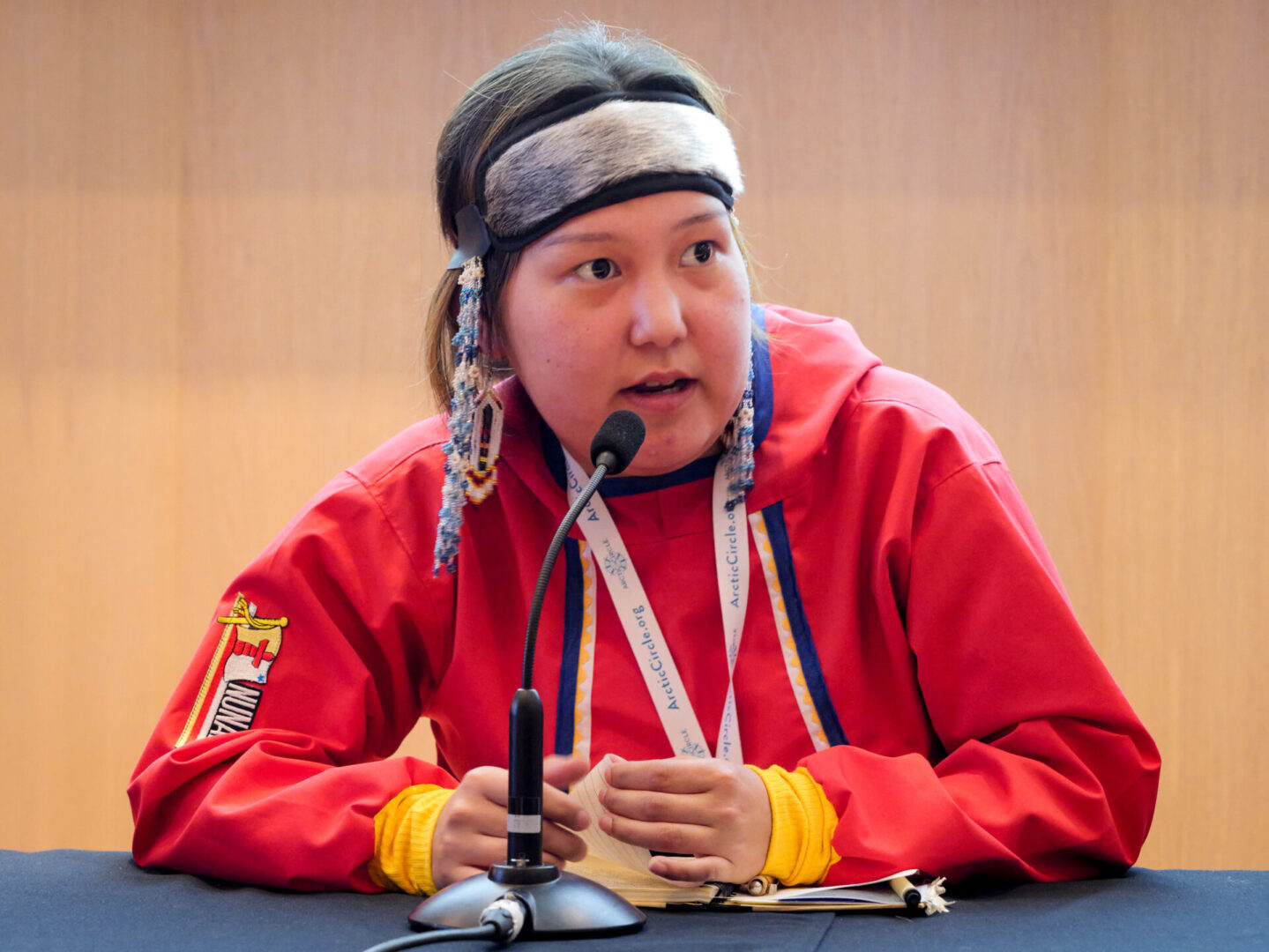
Sherise Tunguaq spoke on the panel “The New Arctic Through the Eyes of Youth Leaders”. Sherise brought her authentic voice and lived experience as a youth from Baker Lake, Nunavut, by sharing her personal journey on expedition and her vision for Northern governance. Her concluding remarks about the future of the Arctic brought widespread applause and cheering from the audience.
“Watching Sherise earn a resounding round of applause was incredible, but what stayed with me most was seeing her realize the power of her own voice.” — Anna Naylor, Program Manager, Blue Futures Pathways
DAY 2
The day started together with a group walk to the Harpa Centre, but once inside the venue, delegates were free to explore independently and attend the sessions that resonated most with their individual priorities. This combination of collective support and individual curiosity allowed each delegate to bring unique takeaways back to the group.
“One of the highlights of ACA was the freedom to shape my own path through the program.” — Mitchell Sallis, Delegate
Advancing Arctic Youth Programs
Lynda Brown and North-to-North alum Priscilla Frankson took the stage for “Advancing Arctic Youth Programs”. Presented against a visual backdrop of SOI expedition photos, Priscilla shared her firsthand experience participating in SOI’s North-to-North Expedition while Lynda detailed SOI’s alumni model. Together they highlighted the necessity of removing financial and logistical barriers, maintaining sustained programming beyond individual project cycles, and securing long-term funding.
“If youth are the future, why is it crazy to think we need to invest in and prepare them today?” — Priscilla Frankson, North-to-North Alumna
GAC Youth Lounge Dialogue
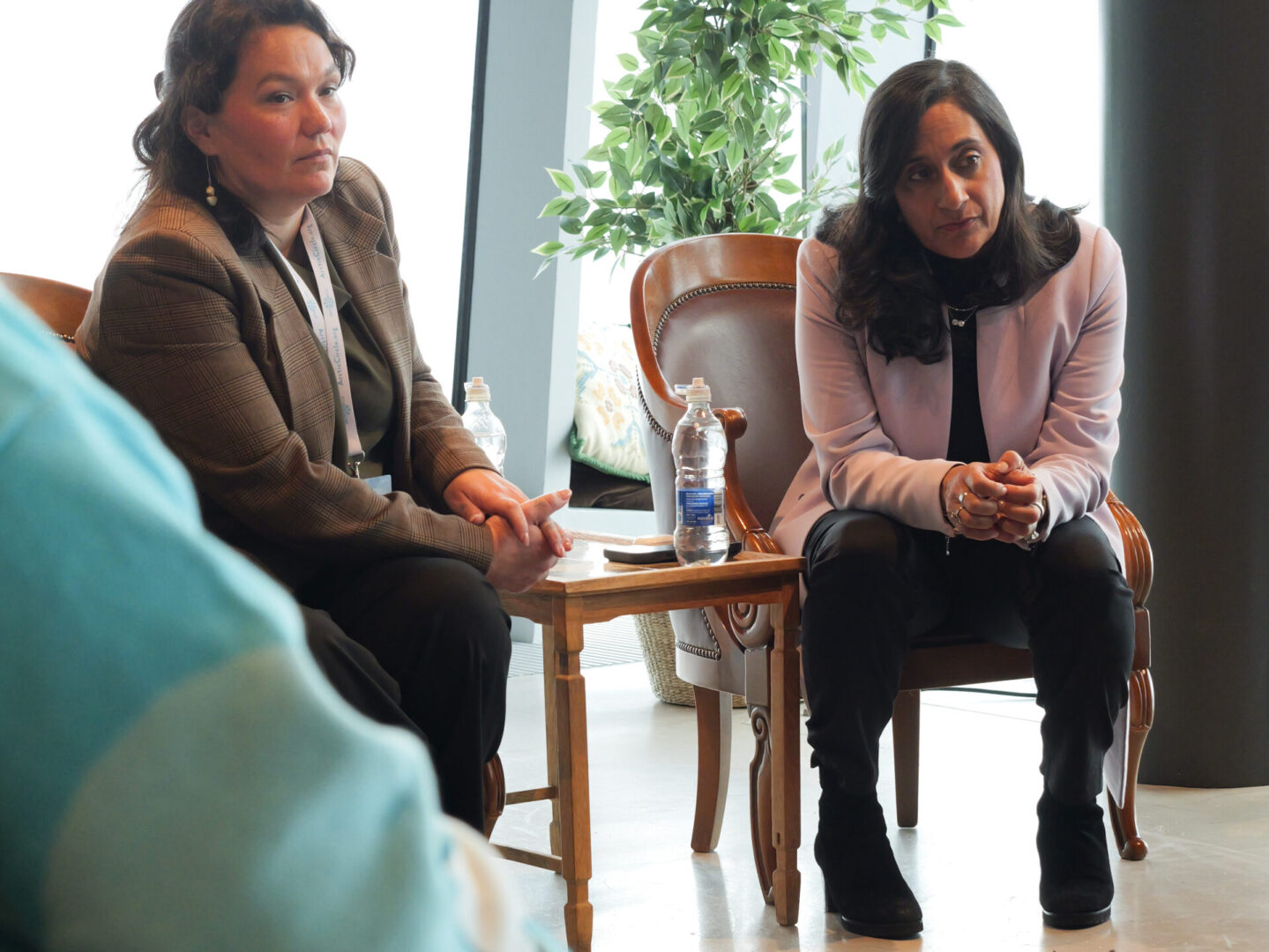
In an intimate roundtable session in the Youth Lounge, the SOI delegation took part in a discussion with Canada’s Minister of Foreign Affairs The Honourable Anita Anand and Arctic Ambassador Virginia Mearns.
The conversation reframed Northern security beyond military defence, emphasizing that true security encompasses food, housing, and health security. Delegate Jordan Brown raised key questions regarding significant gaps in Northern health security. Minister Anand acknowledged the federal and jurisdictional challenges of health security, closing the session with a strong charge to the youth: to keep speaking up, building connections, and advocating for systemic change, even when progress takes time.
“The roundtable with Global Affairs Canada was one of the most meaningful dialogues of the week. Being able to ask Minister Anand directly about Northern health security and how we address healthcare disparities across the Arctic felt very impactful. Her message to us—to keep speaking up, advocating, and pushing for systemic change even when progress takes time—really reinforced why youth engagement at this level is so vital.” — Jordan Brown, Delegate
Community Moments
Following the roundtable, the delegation gathered in front of Harpa Centre alongside other alumni and global partners attending the assembly for an official group photo. This moment reminded us how big the SOI alumni community is and the presence they bring to the conference.
Immediately following the group photo, our delegates rushed to “Behind the Scenes: 30 Years of Arctic Council,” a panel discussion featuring North-to-North alumni Kenneth Høegh and Gunn-Britt Retter. After spotting the SOI contingent in the audience, Kenneth paused the formal discussion to publicly shout out the Foundation, recognizing the value of NGO-led, people-to-people collaboration in building circumpolar trust.
DAY 3
The third and final day of the Assembly saw the delegation bring a week’s worth of confidence, lived experience, and critical perspective into the conference rooms. As the formal program drew to a close, the focus naturally shifted toward long-term systemic change, belonging, and the lasting impact of Northern youth voices.
Gender Data Methodologies & Wildfire Impacts
In morning sessions, delegate Mitchell Sallis attended “Aligning Gender Data Methods for Safer Communities,” reflecting on how small Northern communities must handle data collection sensitively to prevent singling individuals out, while adopting methodologies that can still track social change over time.
“In sessions like Aligning Gender Data Methods for Safer Communities, I came away with practical approaches to ethical, community-centred research that are immediately relevant to my social and gender equity work in Yukon. What made the delegation especially valuable was being provided the opportunity to bring those pan-Arctic perspectives back to my local projects, where they can help ensure that research and programming reflect the needs, safety, and priorities of communities involved.” — Mitchell Sallis, Delegate
Simultaneously, Reese Wainman attended “Wildfires in Northern Communities”. While praising the session’s scientific content, Reese critically observed the complete absence of Indigenous panellists, noting that the all-UK panel lacked local, lived context on community wildfire impacts. Examining a satellite map tracking peat smoke movement across the North, Reese recognized her own recent travel route directly under the smoke plume: “The date on the map was the date I was there. It was crazy”.
Supporting Arctic Youth Leadership in Practice
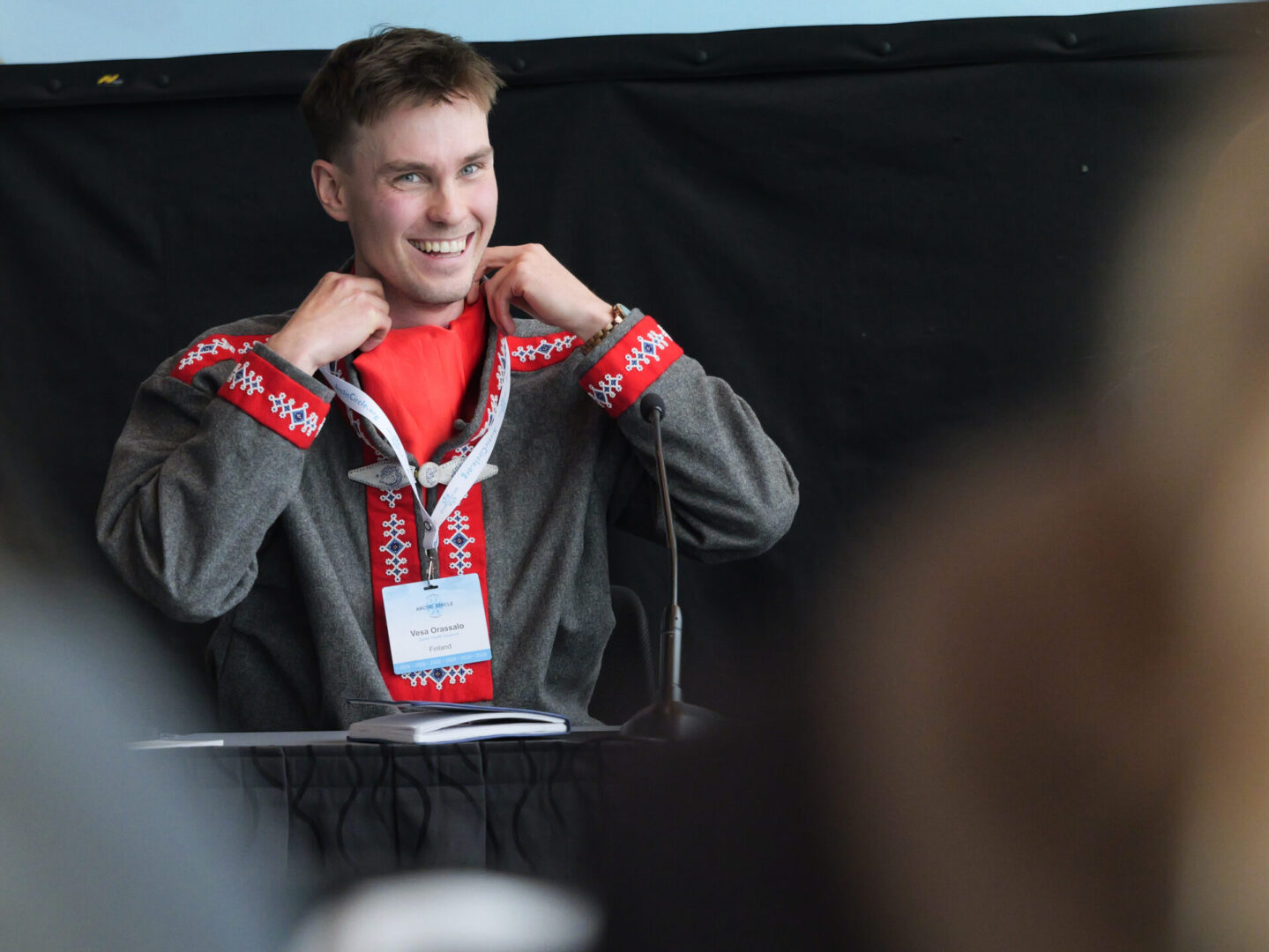
In one of the assembly’s closing sessions, North-to-North alum Vesa Orassalo co-moderated “How Can We Support Arctic Youth Leadership in Practice,” featuring alumna Priscilla Frankson and Nivi Rosing on the panel. Priscilla highlighted her role in planning the upcoming Arctic Youth Conference, stressing that active practice in public speaking and governance builds natural confidence. When addressing imposter syndrome, Priscilla delivered a powerful statement on belonging: “I know who I am and why I am here. I know the value I bring to this conference”.
Looking Ahead: Shared Learnings & Lasting Bonds
Before departing Reykjavík for their respective home communities across Canada, the delegation gathered for a final debrief. Reflecting on their goals, the cohort celebrated not only the impact of their speaking roles and policy contributions, but also the deep personal bonds formed throughout the week.
“Bringing youth into these spaces isn’t just about giving them a seat at the table—it’s about making sure they recognize that they belong there.” — Anna Naylor, Program Manager, Blue Futures Pathways
The 2026 Arctic Circle Assembly demonstrated that Northern youth are not merely passive recipients of Arctic policy—they are active architects shaping its future. Through land-based grounding, authentic storytelling, and institutional advocacy, the SOI delegation ensured that Northern lived experience remains at the heart of global Arctic governance.