



2026 SOI Arctic Expedition: Expedition Recap
The 2026 Students On Ice (SOI) Arctic Expedition brought together 49 youth and 27 educators, Elders, scientists, artists, leaders, and crew from across Canada and around the world for an extraordinary journey of discovery, learning, and connection.
From Ottawa to Nunavut, across the Davis Strait, and through the communities, landscapes, and waters of Greenland, the expedition became a living classroom. Participants learned from the land and ocean, from science and Indigenous knowledge, and most importantly, from the people who welcomed them along the way.
One of SOI’s guiding principles, flexibility is key, was put into practice almost immediately. Sea ice prevented the expedition from following its original route to Pangnirtung, so the Expedition Team changed course along the coast of Baffin Island. Rather than seeing this as a setback, participants embraced the opportunity to explore somewhere new—an early lesson in adaptability, curiosity, and leadership.
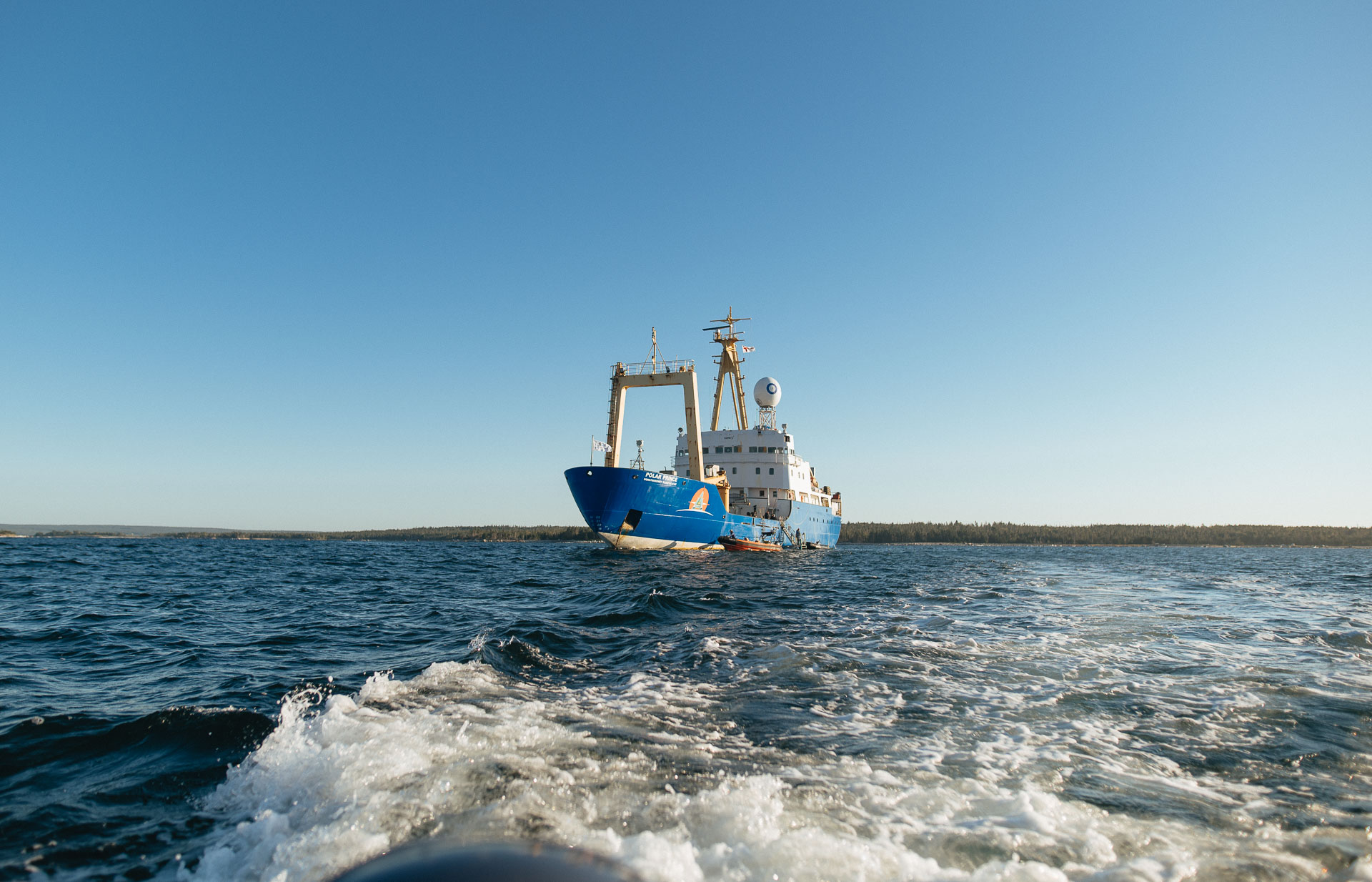
From glaciers and polar bears to community visits, scientific research, cultural exchange, music, storytelling, and friendships aboard the MV Ocean Nova, the expedition brought SOI’s core themes to life: youth leadership, climate action, ocean conservation, biodiversity, culture and geopolitics, and environmental inquiry.
Throughout the journey, youth were not simply observers. They were active participants asking questions, contributing to research, learning from knowledge holders, sharing their own cultures, and building the confidence and relationships to carry what they learned into the world.
Building the Foundations for Arctic Leadership
Our journey began in Ottawa, where participants spent several days building relationships, confidence, and the skills that would carry them through the expedition.
At the National Gallery of Canada, participants explored how art can preserve history, express identity, and create new ways of understanding our relationship with the natural world. The Qillaniq exhibition, featuring works inspired by Indigenous values and community, was particularly meaningful for participants and Educators who knew some of the artists as family or close friends.

At the Canadian Museum of Nature, participants connected Earth’s geological and ecological history with Arctic wildlife, biodiversity, and climate science. The Canadian Museum of History opened conversations about First Nations, Inuit, and Métis histories, cultures, governance, and resilience. At Madahoki Farm, Indigenous educators shared teachings about traditional knowledge, food systems, reciprocity, and sustainable relationships with the land.
Through Camp Fortune and the Amazing Race at Carleton University, participants developed trust, resilience, communication, teamwork, and problem-solving skills.
Together, these experiences showed that understanding the Arctic requires both science and Indigenous knowledge, grounded in cultural understanding. They also reinforced the importance of youth who are ready to listen, learn, and lead.
Finding Our Way North
In Iqaluit, the expedition truly began.
Participants were welcomed at Iqaluit Cadet Hall, where Inuit Elder Ann Hansen and Natan Obed, President of Inuit Tapiriit Kanatami and Vice-President of the Inuit Circumpolar Council (Canada), spoke about Inuit leadership, culture, and collaboration across the Arctic.
Soon after, Zodiacs carried participants across the water to their new home and floating classroom, the MV Ocean Nova. Curious seals and a brilliant pink Nunavut sky provided a spectacular welcome.

The Arctic quickly offered another lesson in adaptability. Participants learned to work with changing conditions, navigate unfamiliar terrain, and embrace the unexpected. In Charles Francis Hall Bay, they hiked toward a glacier, explored snow-covered hills, and cruised past waterfalls. In the Torngat Mountains, they learned to respond to wildlife and weather while discovering Arctic plants and birds, shoreline ecosystems, fishing, and the deep connections between people and place.
The landscape itself became a classroom, demonstrating the SOI approach to learning through direct experience, curiosity, and connection.
Exploring the Wild Heart of the Arctic
Wildlife encounters brought those lessons to life, helping participants understand Arctic biodiversity and the interconnectedness of land, sea, wildlife, and people.
In Nachvak Fjord, participants watched polar bears move along the shoreline, caribou graze on the tundra, seals surface beside the ship, and a peregrine falcon soar above the cliffs. Later, a pod of pilot whales surfaced alongside the MV Ocean Nova, offering a firsthand glimpse into the rich marine life of the Arctic.
“The SOI Expedition was one of the most memorable experiences of my life. The beauty of Nunavut and Greenland reminded me why protecting these places for future generations matters. As an environmental field technician, seeing Arctic science and environmental stewardship firsthand gave me new knowledge and perspectives to bring back to my community. I’m deeply grateful for the experience and the friendships I’ve made with people from around the world.” – Travis Benedict, Youth Participant, Akwesasne Mohawk Nation
In Ramah Bay, participants paddled kayaks and stand-up paddle boards, fished for Arctic species, and learned about sustainable harvesting and the enduring relationship between people and the sea. Around the fire, they made bannock with Educators Valérie and Elder Annie, shared stories, and reflected on the knowledge held within the land and community.

These experiences reinforced a central SOI lesson: biodiversity is not separate from people. The health of Arctic ecosystems, cultures, communities, and livelihoods are deeply interconnected.
“The greatest gift we take away from the Torngats isn’t a photograph or a souvenir, but its perspective. In this Inuit homeland, where the land, culture and spirit are inseparable, we learned that belonging comes from respect, leadership begins with listening, and every one of us has a responsibility to carry these stories forward. Few will ever experience this extraordinary place, but all of us who have are forever connected to it.” – Wayne Broomfield, SOI Educator/Bear Guard
A Floating Classroom Across the Davis Strait
Leaving the Torngat Mountains behind, we crossed the Davis Strait toward Greenland. The two-day crossing became an opportunity to explore Arctic leadership and scientific inquiry.
Through workshops and hands-on learning, participants connected science, storytelling, and Indigenous knowledge to better understand the Arctic and the challenges facing its ecosystems and communities.
“One of the most powerful parts of watching whales and other marine life with students is seeing their curiosity turn into questions. Throughout the expedition, seabirds, seals, and whales were our constant companions, reminding us that the ocean is a connected system linking marine life, climate, food webs, and Northern communities. I hope these encounters deepened students’ connection to the natural world and inspired them to become advocates for a healthy Arctic Ocean.” – Megan McOsker, SOI Educator / Field Biologist
Educator Valérie Courtois challenged participants to consider their own role as allies and future leaders in conservation. Through the work of Indigenous Guardians and Fire Guardians, they explored how Indigenous-led stewardship can protect ecosystems, strengthen communities, and shape more respectful approaches to conservation—and how they can support that work in their own communities.

Participants helped deploy three ocean drifters on behalf of Fisheries and Oceans Canada: Anori, Tariurmit Qaujisaqti, and Nova Rova, which will collect data on sea surface temperature, movement, and ocean circulation. For the youth who released them, the experience created a direct connection to ongoing Arctic ocean research and demonstrated how young people can participate in real-world scientific inquiry.
As always aboard an SOI expedition, science was balanced with creativity and community, as participants shared traditions, expressed themselves, and built friendships that grew stronger with every day at sea.
Kalaallit Nunaat: Learning From Greenland
Greenland welcomed us with dramatic mountains, calm fjords, glaciers, wildlife, and communities rich in history and culture.
Participants explored Greenland through science, culture, and storytelling, deepening their understanding of how climate, ecosystems, communities, and history are interconnected.
In Tasermiut Fjord, Zodiacs carried participants toward a glacier. As fog lifted and the landscape emerged beneath blue skies, the group paused in silence, taking in the scale and beauty of the ice.
“Standing before this glacier, I wanted students to see that climate change isn’t something happening somewhere else—it’s happening here, and now.” – Lauritz Schonfeld, SOI Educator / Geologist / Glaciologist

For participants, climate change was no longer an abstract concept. They were witnessing its presence within a living landscape.
Across Southern Greenland, participants connected with the landscape and communities through hands-on learning, cultural exchange, and time on the water. They explored how environmental change intersects with Arctic ecosystems, history, culture, and community life. Each landing offered another perspective on a changing Arctic and the people who call it home.
“Being in Greenland is always awe-inspiring. Its pristine nature stays with you and leaves you humbled. Being part of the SOI Expedition created a special community built on curiosity, friendship, and a shared desire to understand the world around us. Together, we explored the realities of climate change and today’s complex global politics, including growing tensions around U.S. interest in acquiring Greenland. Students left with a deeper understanding of Greenland’s governance and sovereignty—and with a clear message: *Greenland is not for sale*.” – Nauja Bianco, SOI Educator
Community, Culture, and Connection
Some of the expedition’s most meaningful learning happened through community exchange.
In Uunartoq, local hosts welcomed participants with traditional country foods, including narwhal and dried fish. Students experienced the island’s hot springs, explored the surrounding landscape, and learned about the ecology and history of the region.
In Alluitsup Paa, home to just over 100 residents, music became a bridge between cultures. Kuugaq shared drum dancing, Educators Becky and Kathy performed Inuit throat singing, and Kathy and Johannes performed a duet. Soon, songs were flowing in both directions, conversations continued, and new friendships formed.

“One of the most meaningful parts of the expedition was reconnecting with my family in Greenland. Even in just a few hours together, their love and generosity reminded me how deeply connected I am to my roots. SOI gave me the chance to experience places I had only dreamed of—and, most importantly, deepened my connection to my culture.” – Ivalu Beveridge, SOI Youth Participant
The expedition also gifted the community’s newly built school a copy of Hearts Wide Open, Students On Ice’s collection of stories and reflections from alumni who have travelled through the Arctic—connecting young people and communities across generations.
Our daily Indigenous word of the day offered another way to deepen that connection. In Greenland, sila reminded us of our relationship with weather and the natural world, while ataqatigiinneq reflected the spirit of togetherness that grew aboard the MV Ocean Nova.
Understanding a Changing Arctic
In Qaqortoq, participants explored the many dimensions of modern Greenland.
At Great Greenland, they learned how sustainably harvested seal skins are transformed into clothing, footwear, and other handcrafted products, gaining insight into traditional skills, local livelihoods, and the respectful use of natural resources.

Another group explored mining and rare earth metals, learning about the critical minerals needed for renewable energy technologies and the complex balance between resource development, environmental stewardship, economic opportunity, and community well-being.
Mayor Malene Vahl Rasmussen joined the expedition aboard the MV Ocean Nova and shared openly about life and leadership in Qaqortoq and the challenges facing northern communities. Her honesty and passion created a meaningful connection between the expedition and the community.
These experiences reminded us that the Arctic is not defined by a single story. Tradition and innovation, economic development and conservation, science and culture, local priorities and global geopolitics all intersect here.
Living the SOI Spirit
Throughout the expedition, leadership was not limited to workshops or formal lessons. It happened when participants supported one another through challenging conditions, stepped outside their comfort zones, shared a song, taught a skill, or simply listened. The ship became a place where science and storytelling could sit alongside music and laughter.
“As Indigenous people, our responsibility to the land is inherent. Coming here connected me with Indigenous people from around the world who are working toward the same thing. It reminded me that climate change will only be addressed through the connections and actions we build together.” – Neepin Cook, Youth Participant, Misipawistik Cree Nation
Through hands-on learning, cultural exchange, and creativity, participants built new skills, perspectives, and relationships. We explored the Arctic through science and technology while sharing music, art, traditions, and laughter. Evenings of celebration, including SOI Spa Night and the Talent Show, strengthened the sense of community that had grown aboard the MV Ocean Nova.

Expedition Leader Geoff Green captured the strength of the SOI community:
“When you’re wearing an SOI shirt, someone will recognize it in airports all over the world. That’s where the magic happens and what Students On Ice is all about. We’ve connected with each other, we’ve connected with Mother Nature, and I think everybody leaving this journey has definitely changed and transformed.” – Geoff Green, SOI Founder and Expedition Leader
Across countries, cultures, and generations, participants discovered that the SOI community extends far beyond the ship.
A Final Farewell to Greenland
Our final Zodiac excursion through Eternity Fjord, or Kangerlussuatsiaq, offered a spectacular farewell to Greenland. Towering cliffs and ancient glaciers surrounded us as we watched a massive iceberg roll and reveal its deep blue interior. Then, a glacier calved into the sea with a thunderous crash. For a moment, everyone fell silent.

It was a powerful reminder of the scale and dynamism of the Arctic and of the landscapes, ecosystems, and communities experiencing profound change.
As the MV Ocean Nova sailed through Kangerlussuaq Fjord toward the end of the expedition, the focus shifted from exploring the Arctic to reflecting on what we would carry home.
The Journey Continues
Our final day aboard the MV Ocean Nova brought celebration, gratitude, and the familiar sadness of saying goodbye.
Educator Mike introduced participants to PEBS (Post-Expedition Blues Syndrome), while Education Manager Cécile introduced the SOI Alumni Program and reminded everyone that the end of the expedition is really the beginning of the next chapter.
Captain Barrios offered one final reflection, comparing an expedition and life itself to a pencil. The sharpened point reminds us to stay focused, the eraser reminds us that mistakes are opportunities to learn, and what matters most is what is inside: our character, kindness, and resilience.
We returned home carrying far more than photographs and memories. We carried the stories shared by Inuit Elders and Knowledge Keepers, the generosity of northern communities, the lessons of scientists and educators, the songs and art of our expedition family, and friendships that crossed borders and cultures.
Most importantly, we returned home with a deeper understanding that leadership begins with listening, and that science and Indigenous knowledge are stronger together. Caring for the Arctic begins with meaningful relationships to people and place, and a commitment to act on what we have learned.

The Arctic shared its stories with us. Now it is our turn to carry them forward.
As members of the growing Students On Ice alumni community, our individual journeys continue with full hearts, new perspectives, and a commitment to become thoughtful, active leaders and stewards in a changing world.
Ataqatigiinneq. Togetherness, connection, and the strength of being united. The journey may have ended, but what we learned, the relationships we built, and the responsibility we share to care for our changing world continue with us.